


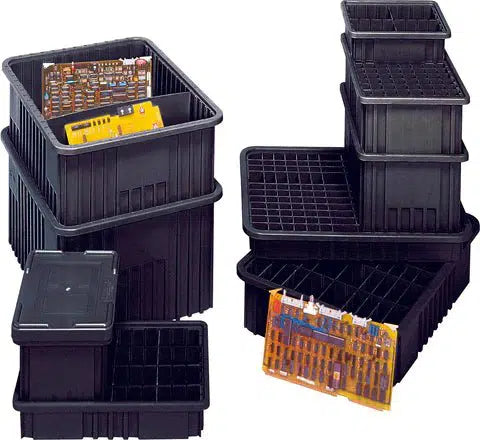
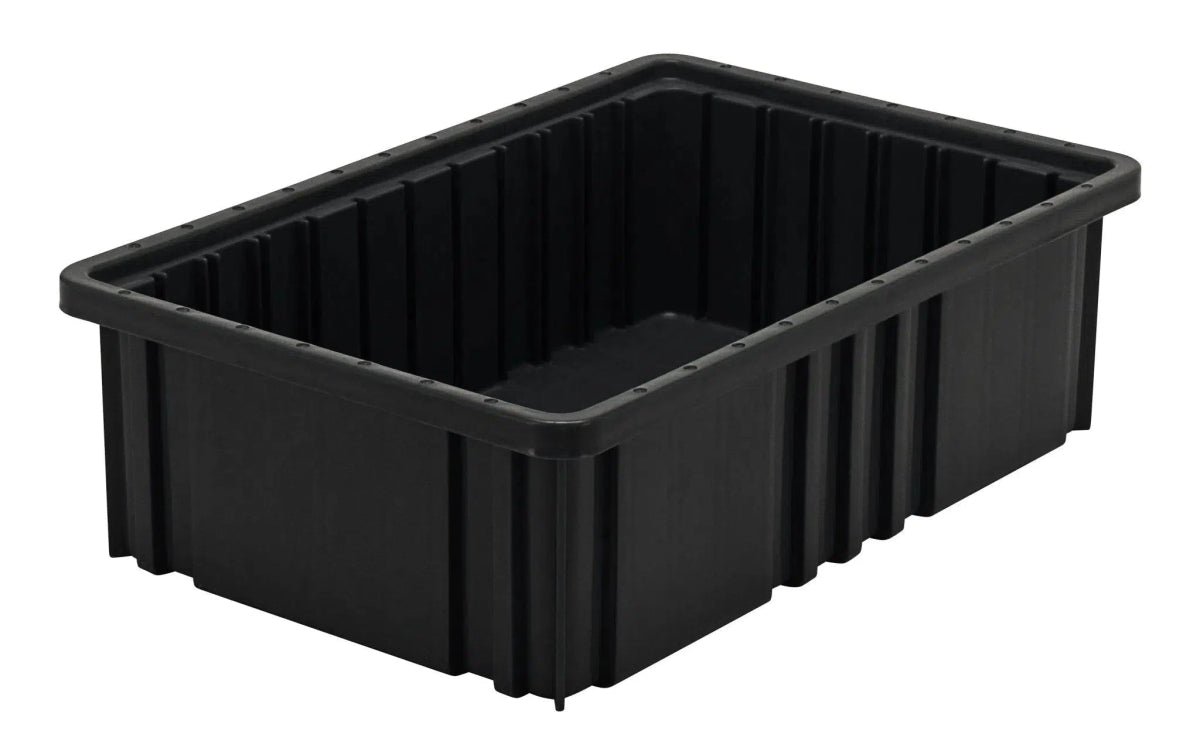
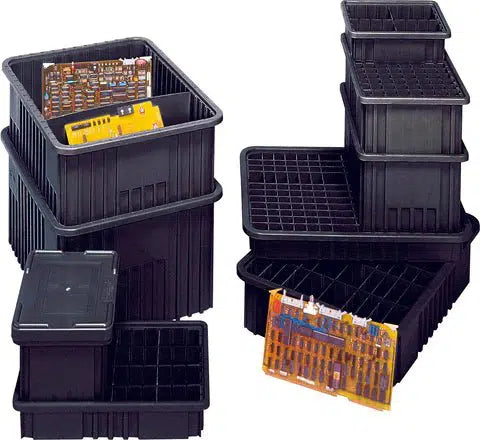
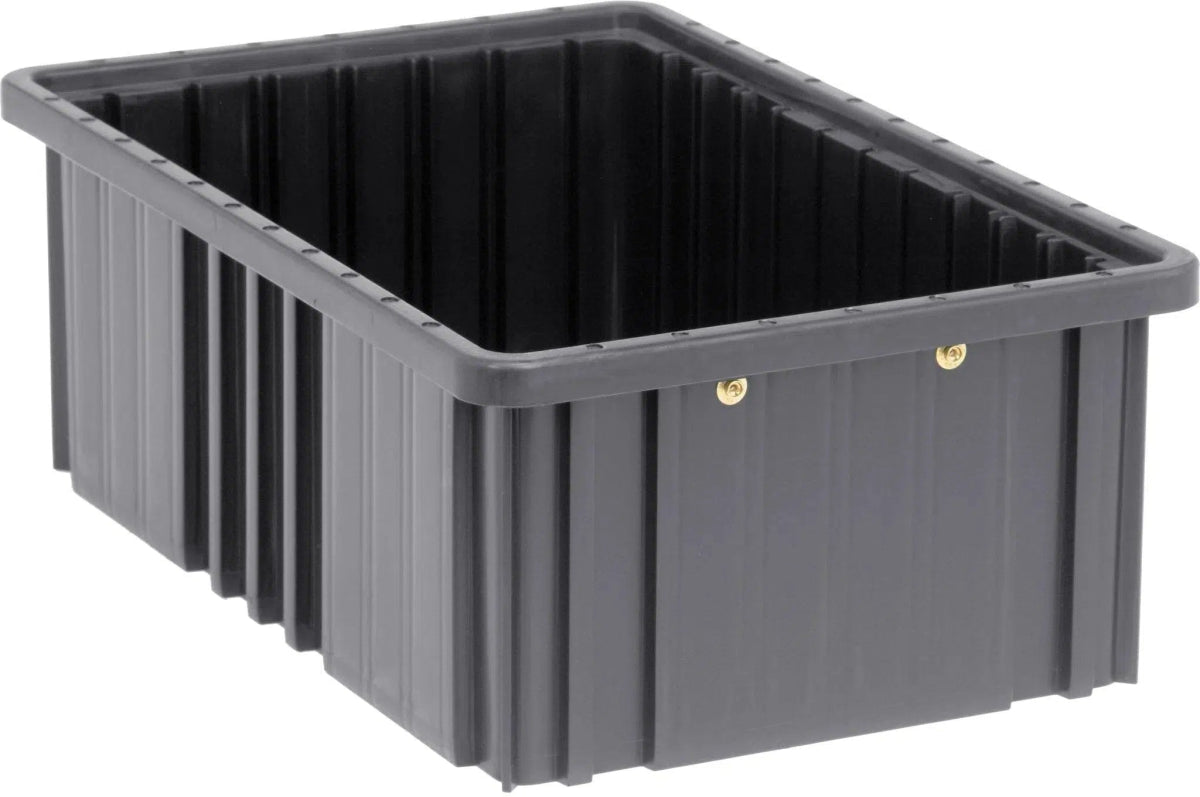
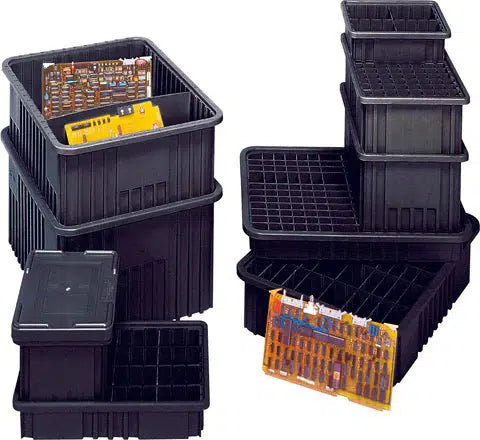
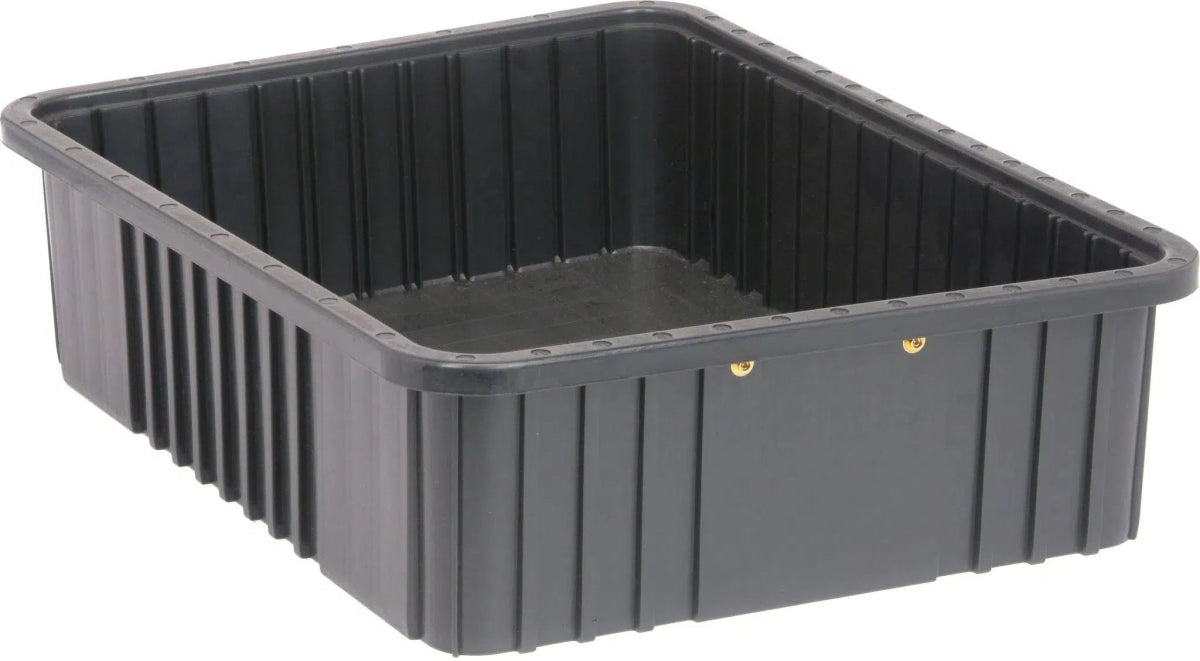
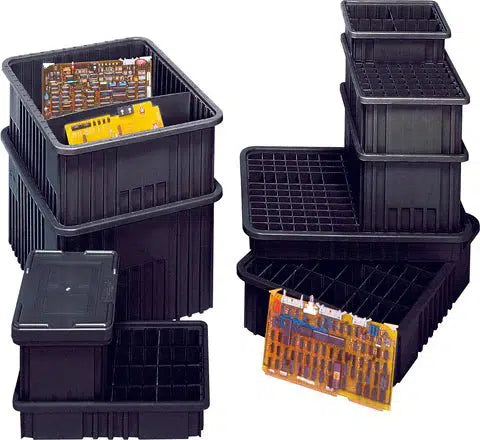
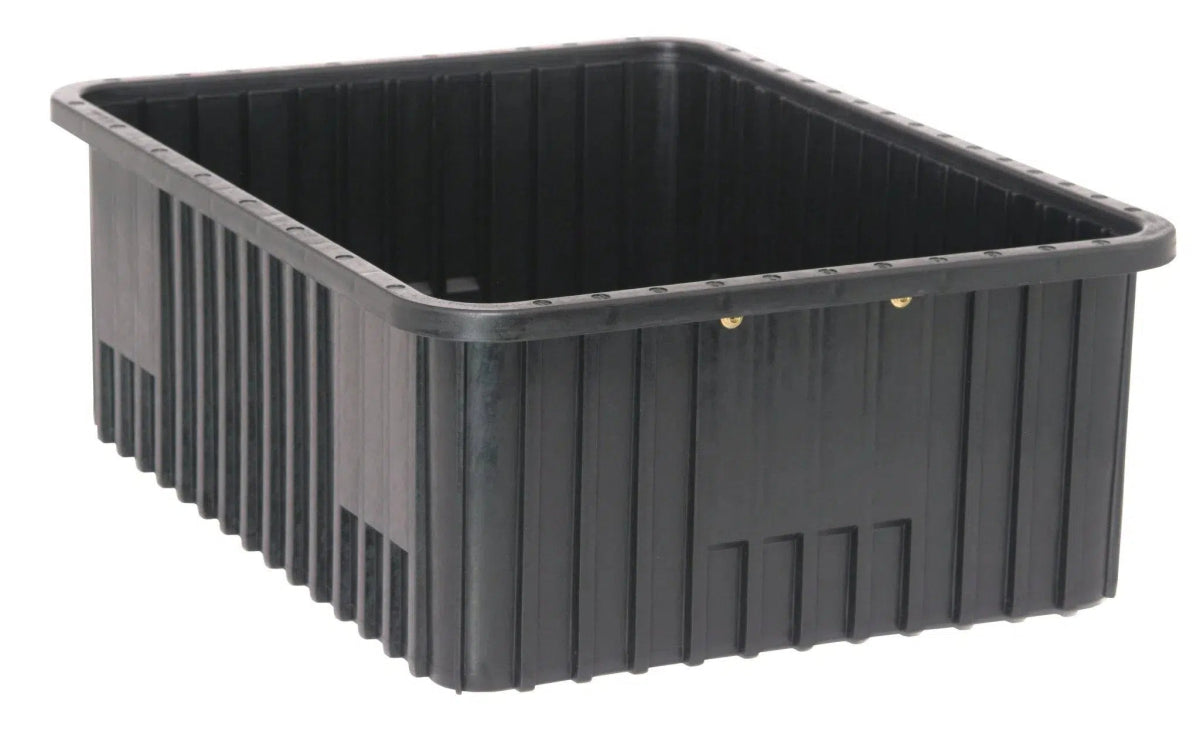


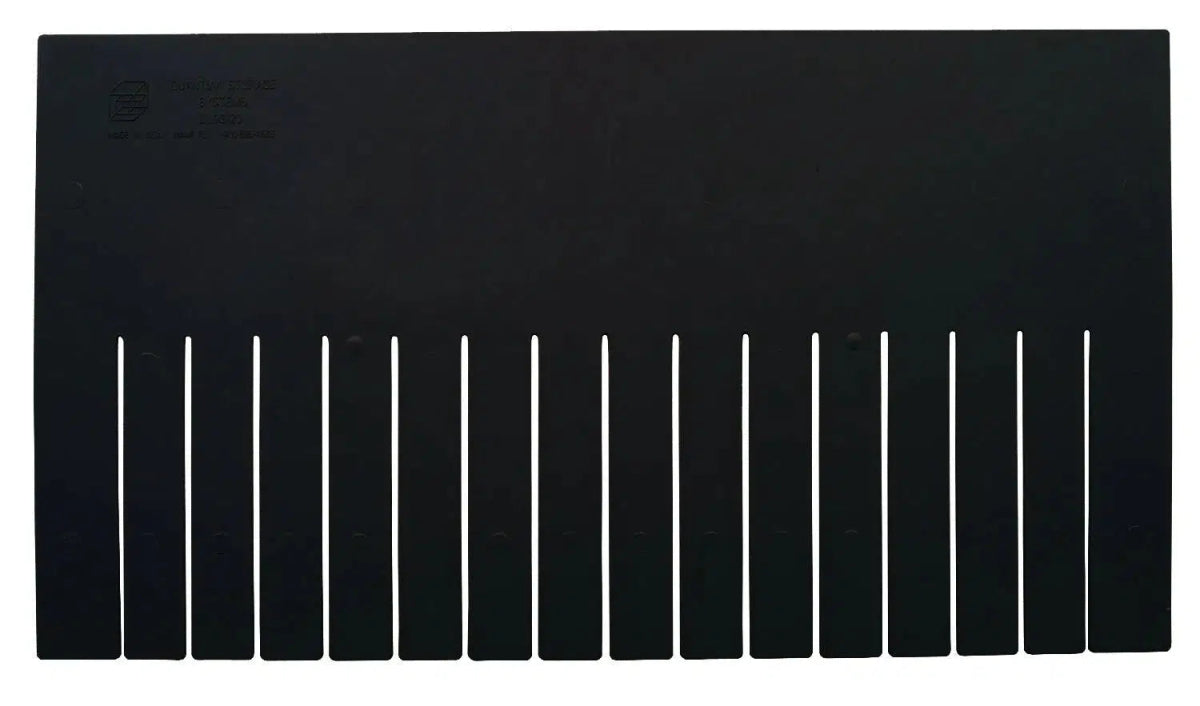
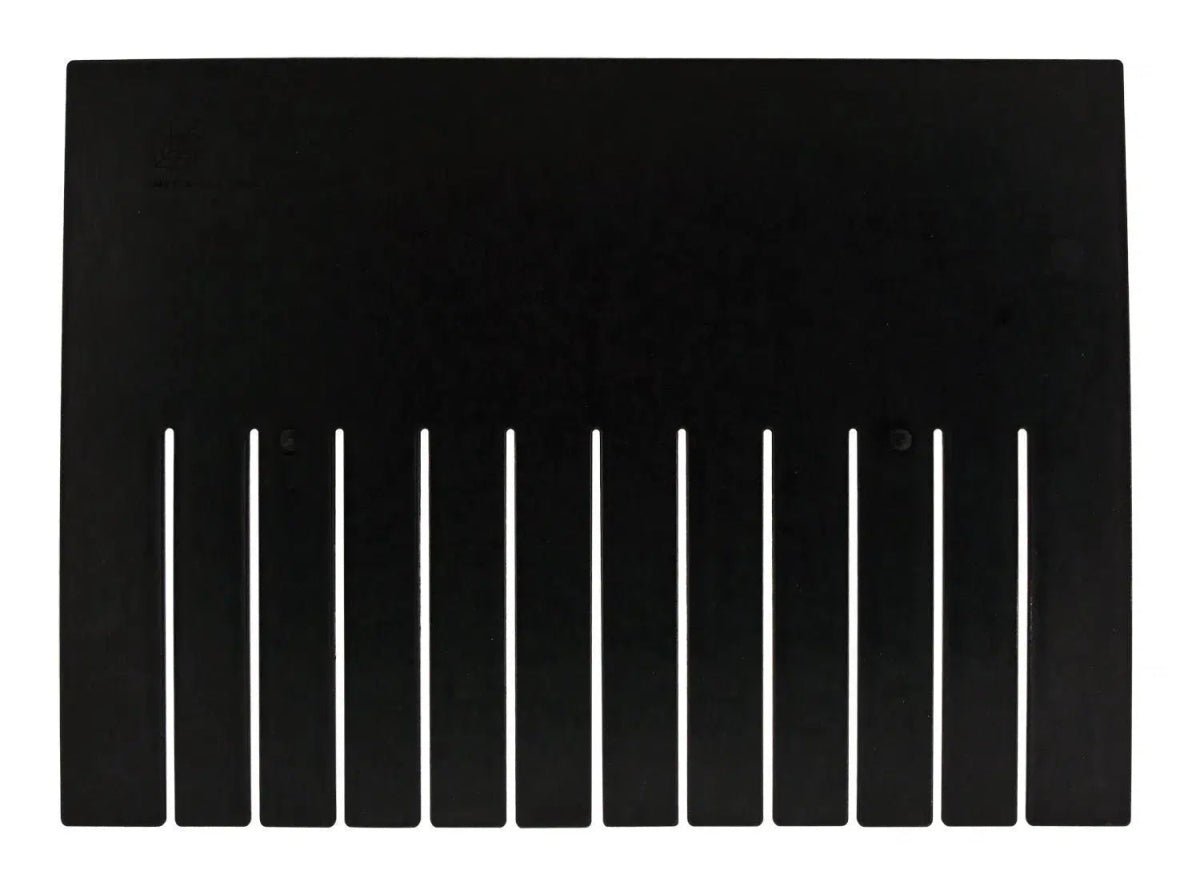
ESD Safe Divider Boxes & Dividable Grid Containers
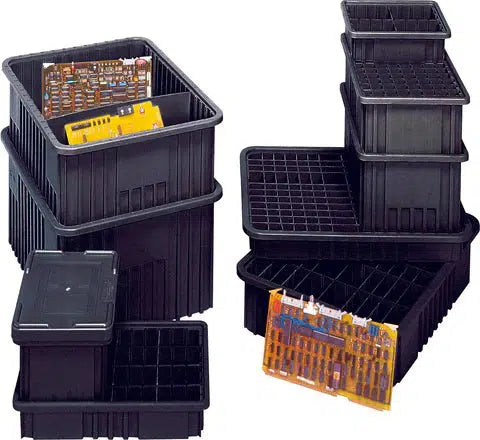
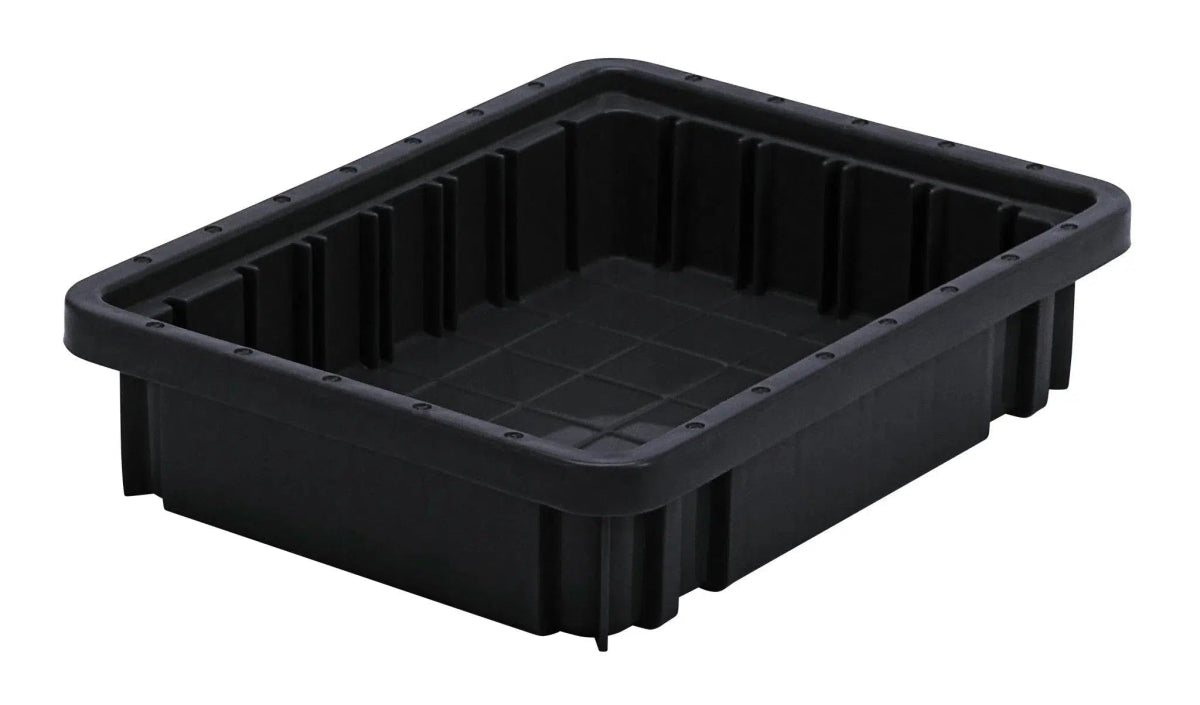
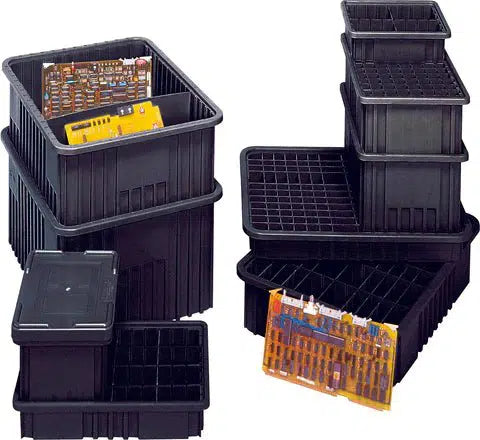
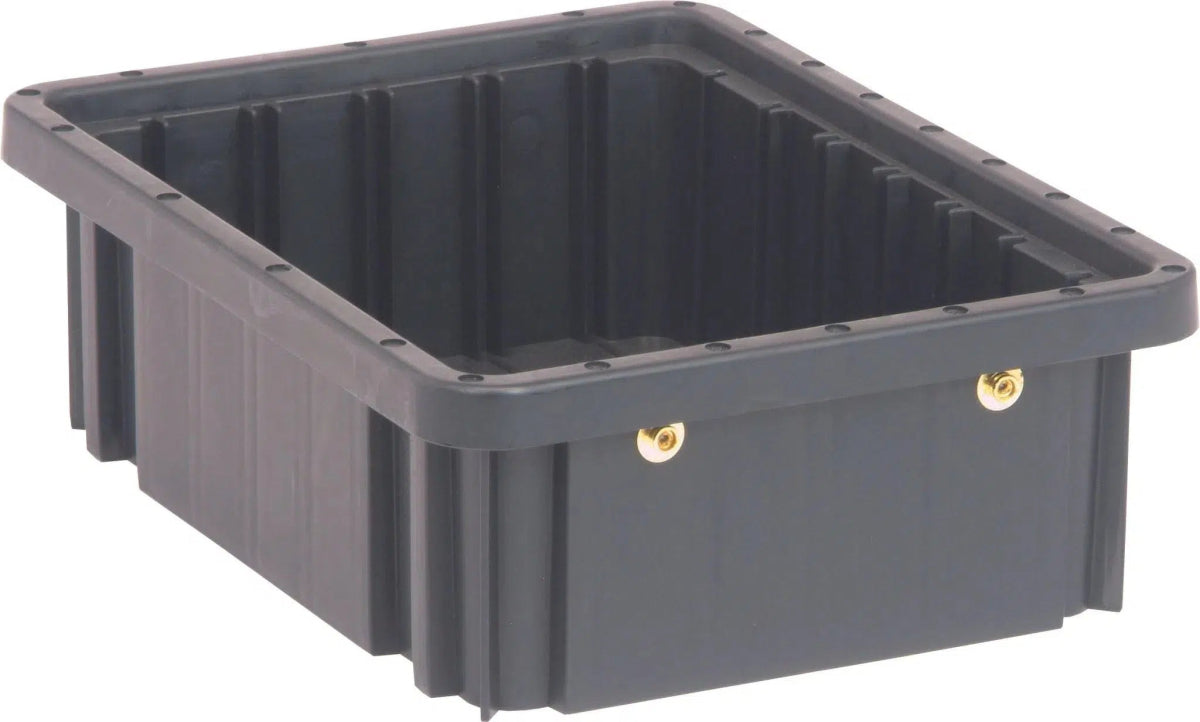
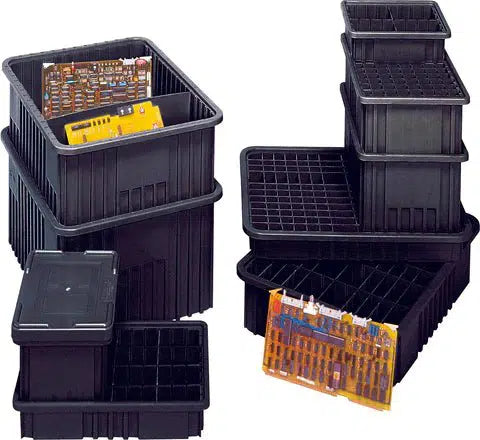
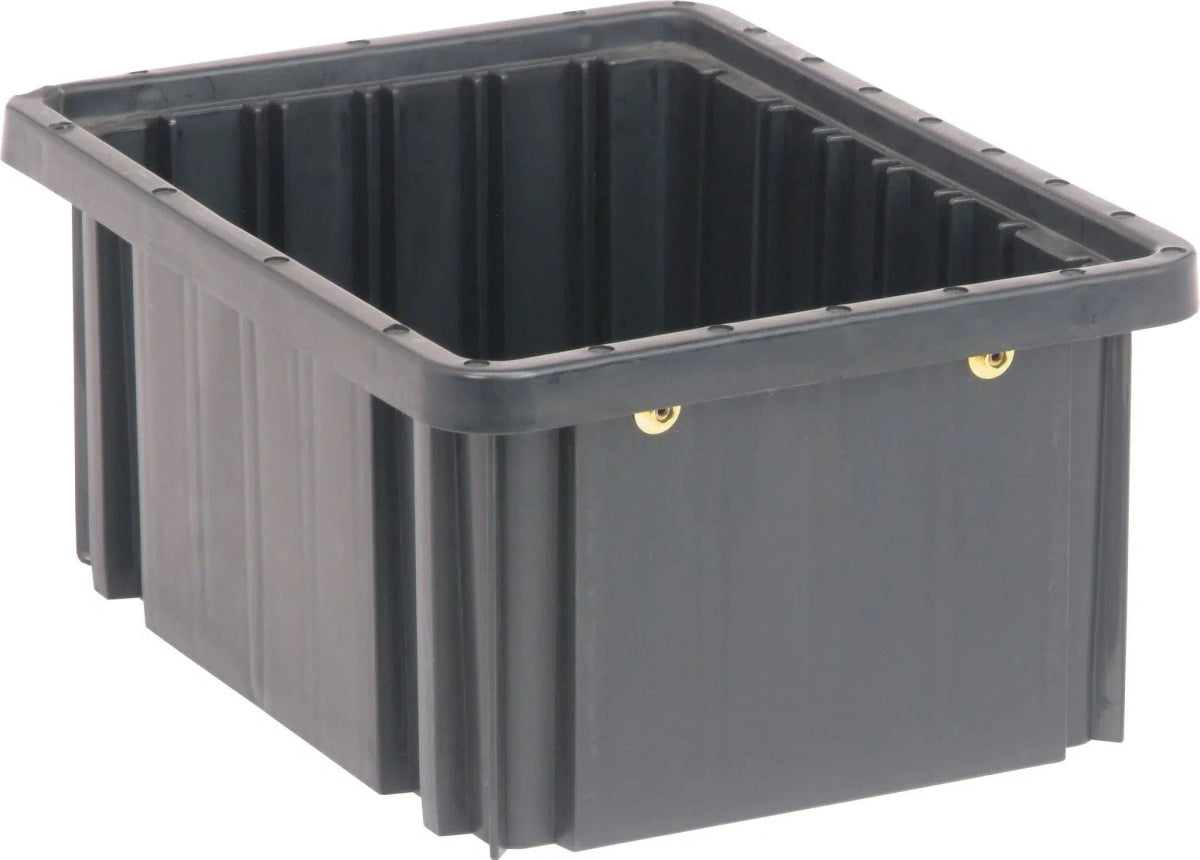
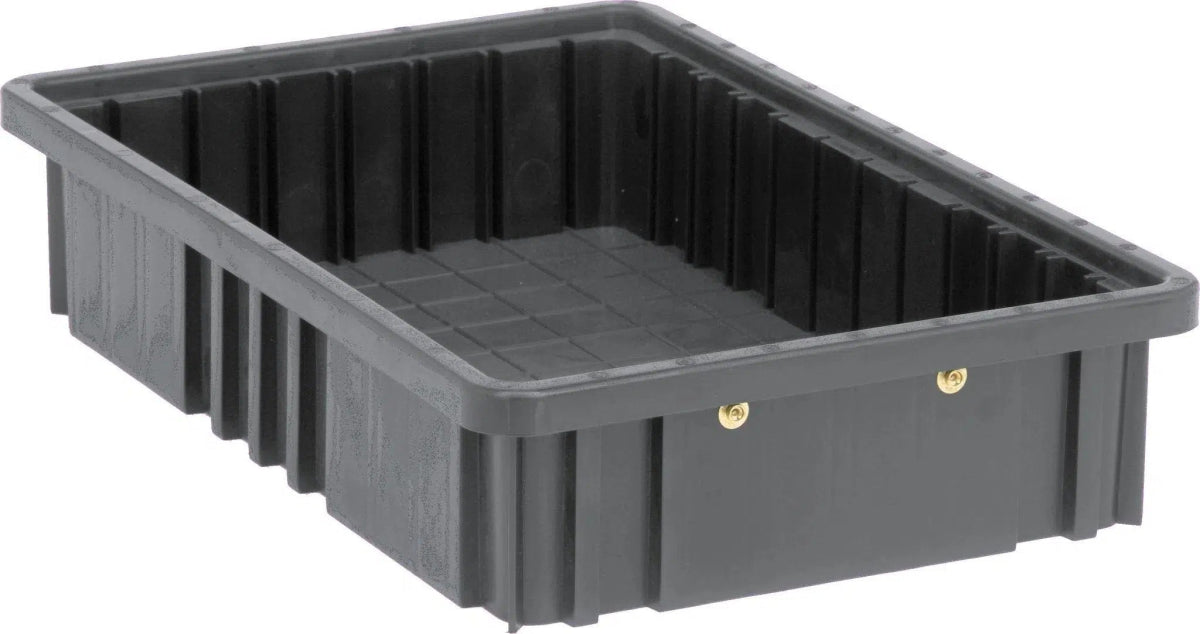
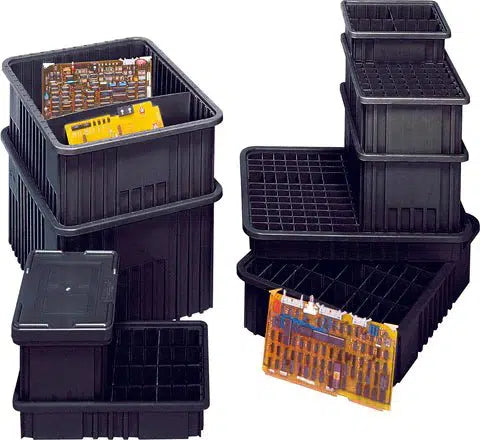
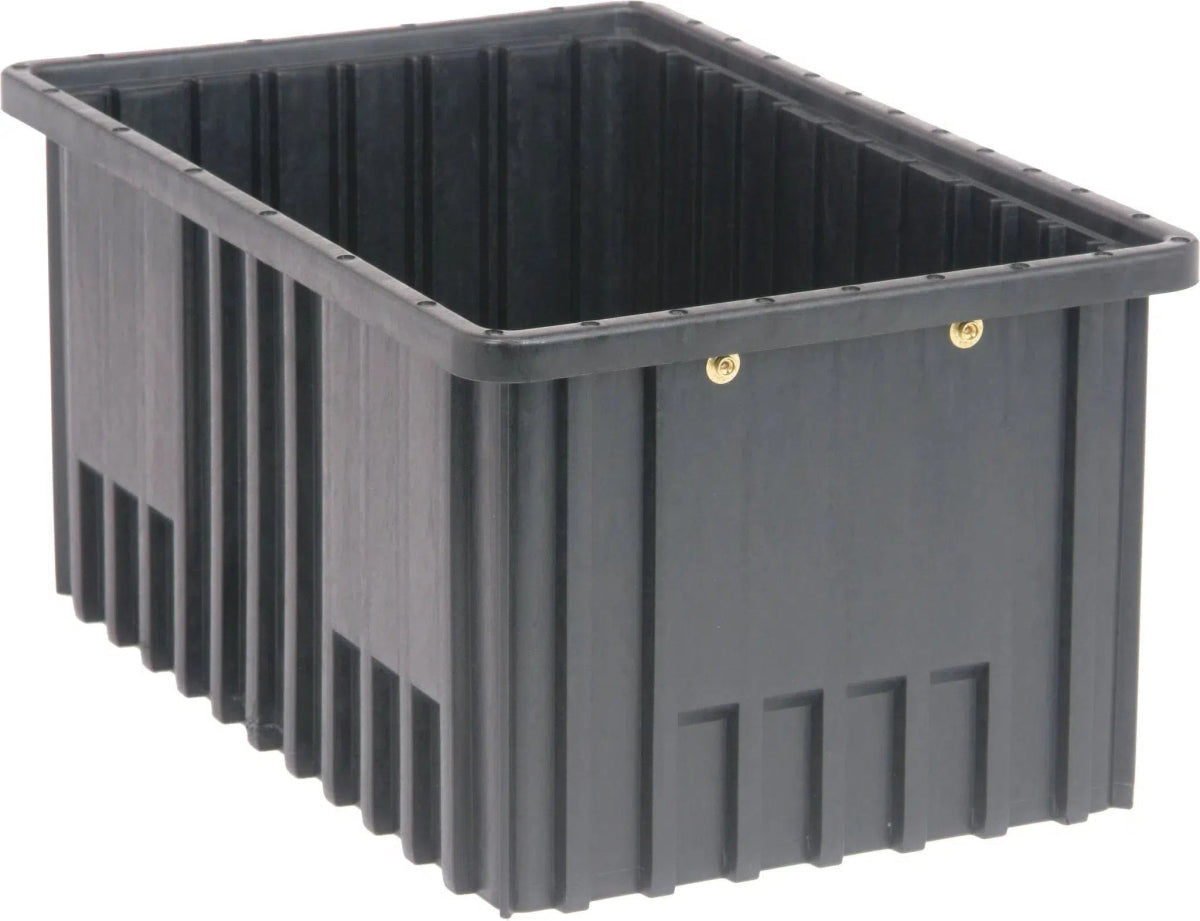
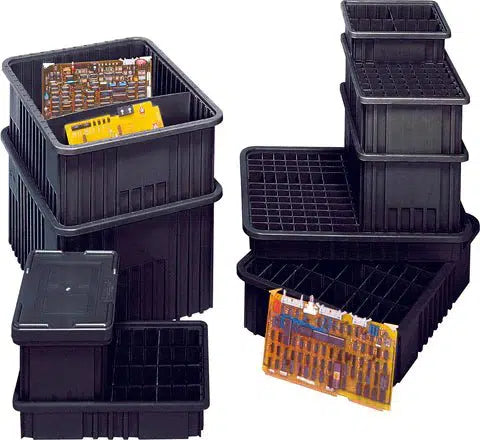
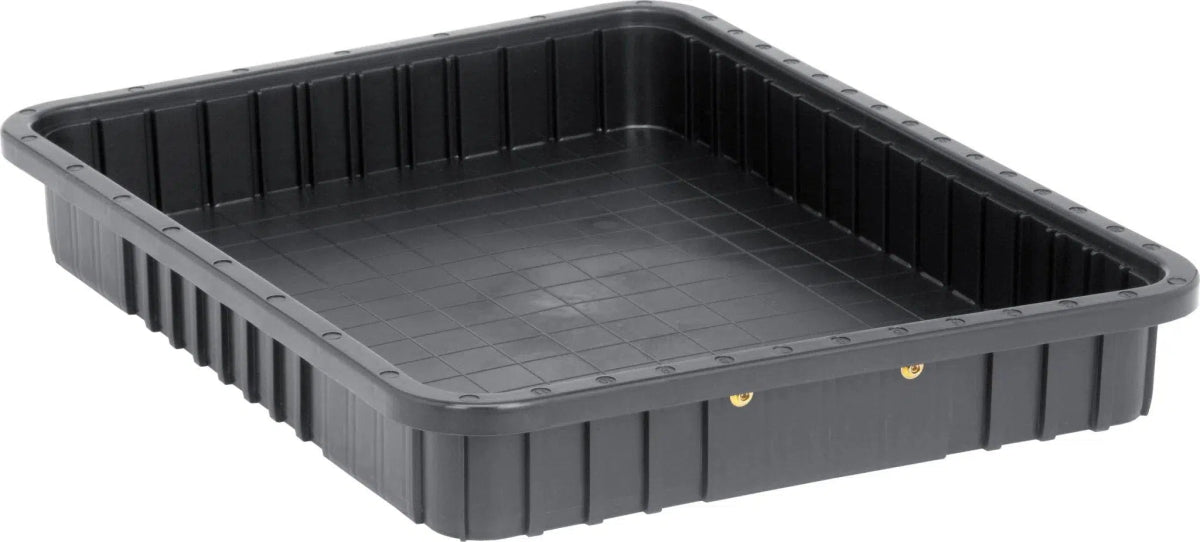
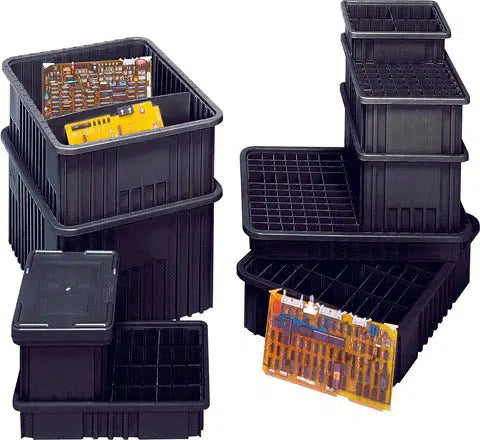
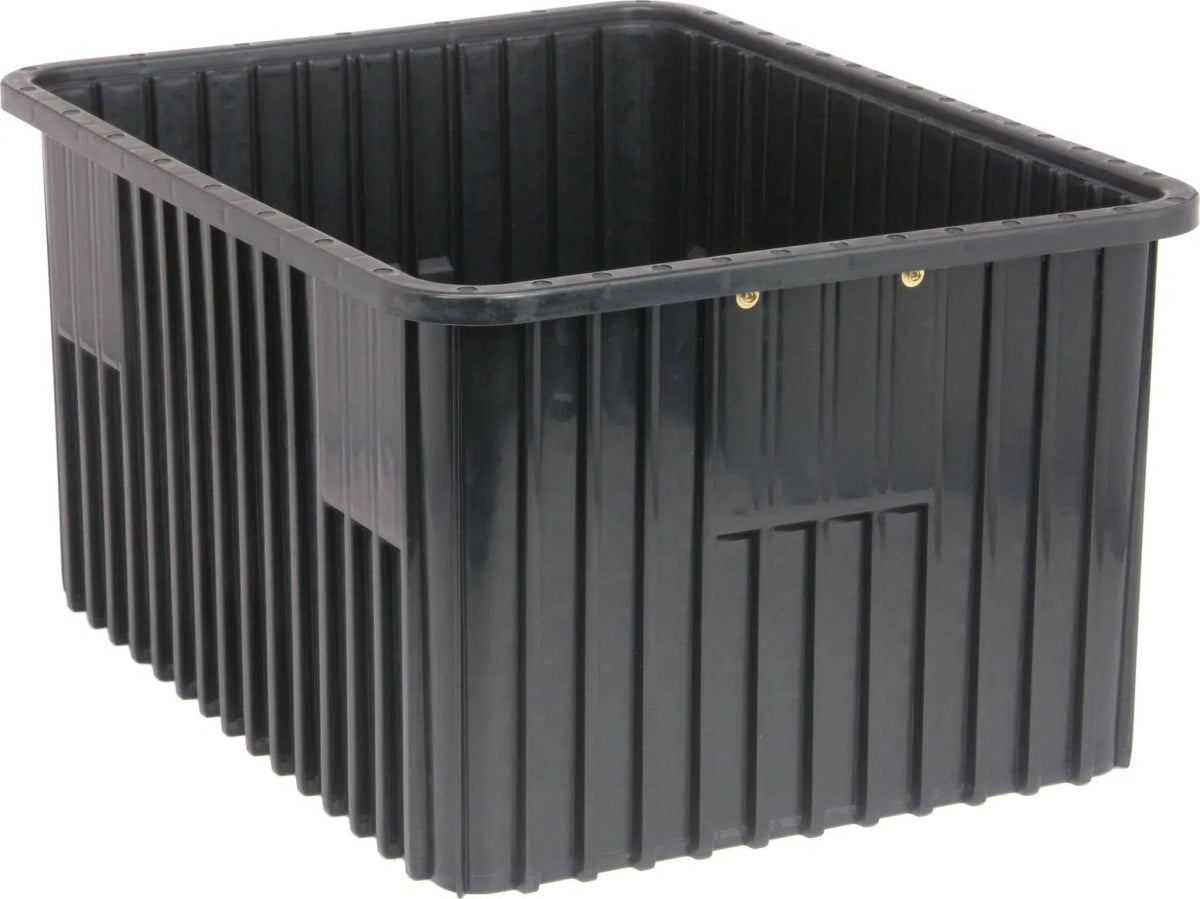
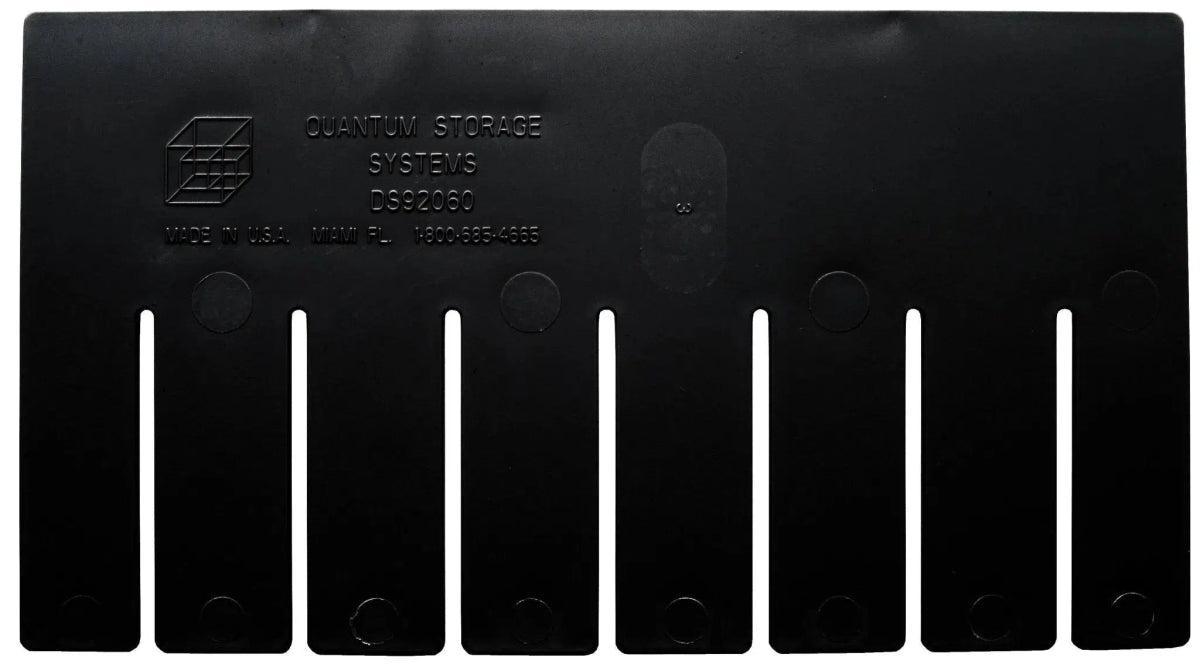
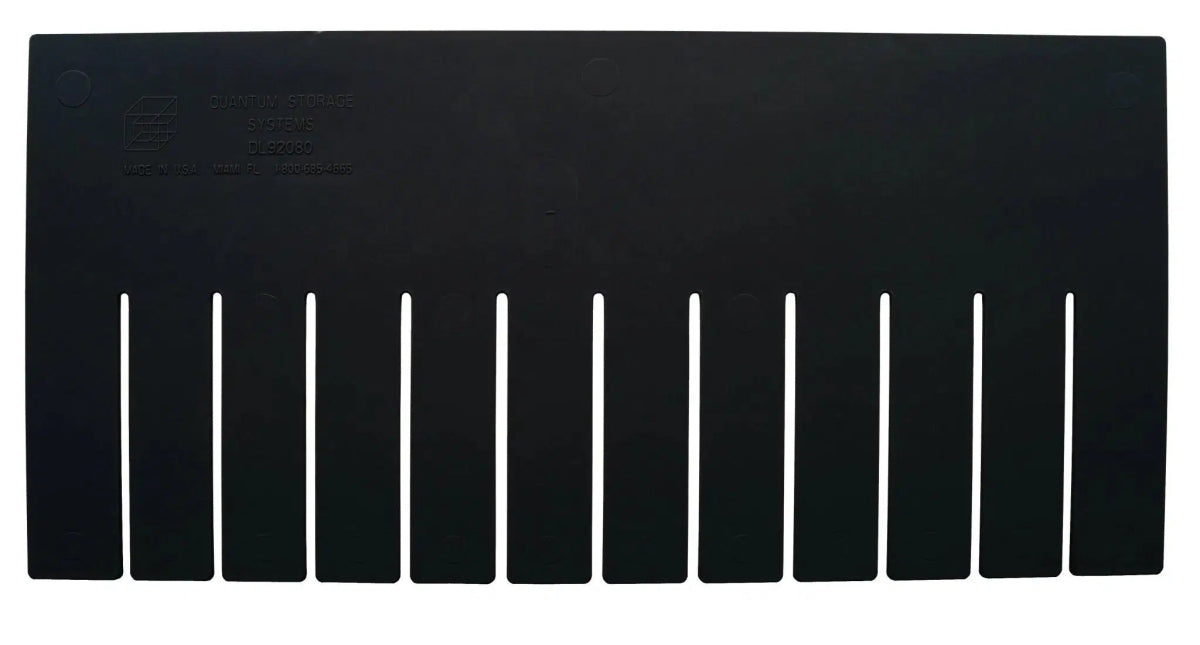
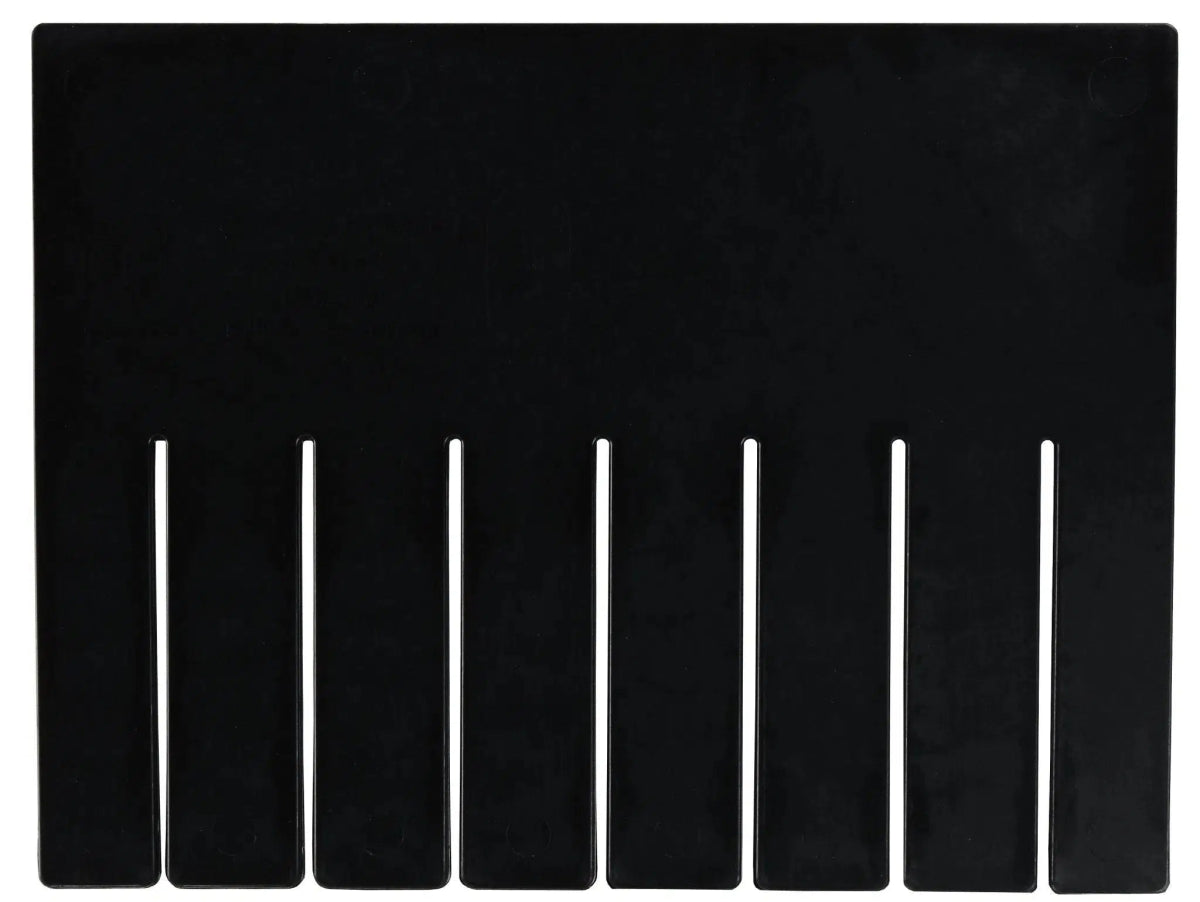
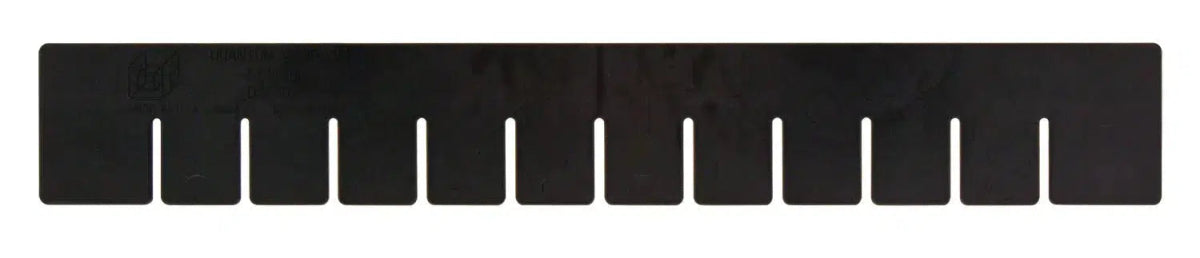
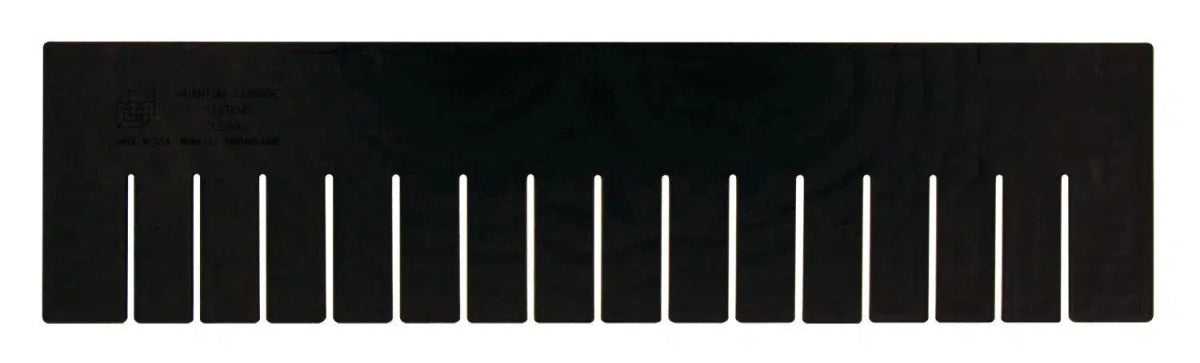
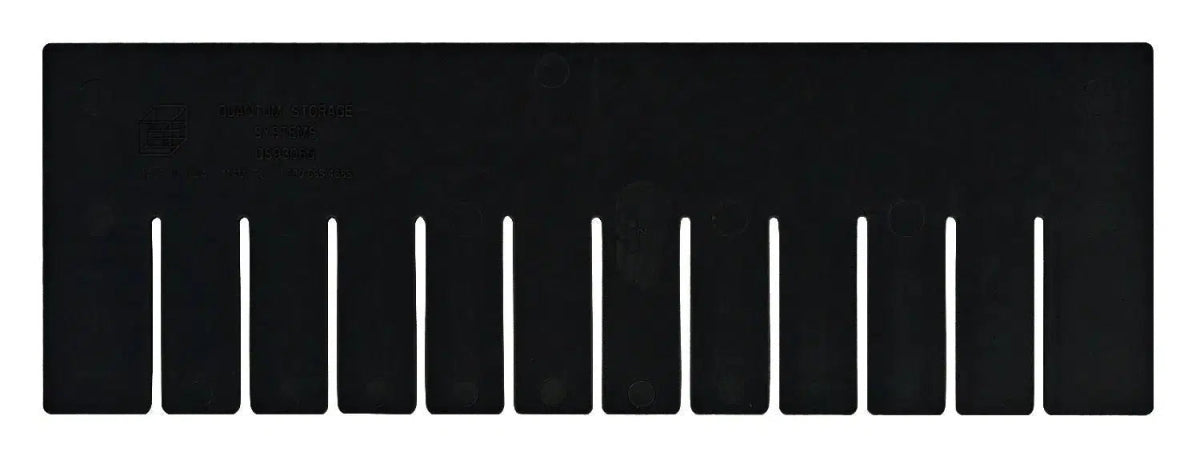
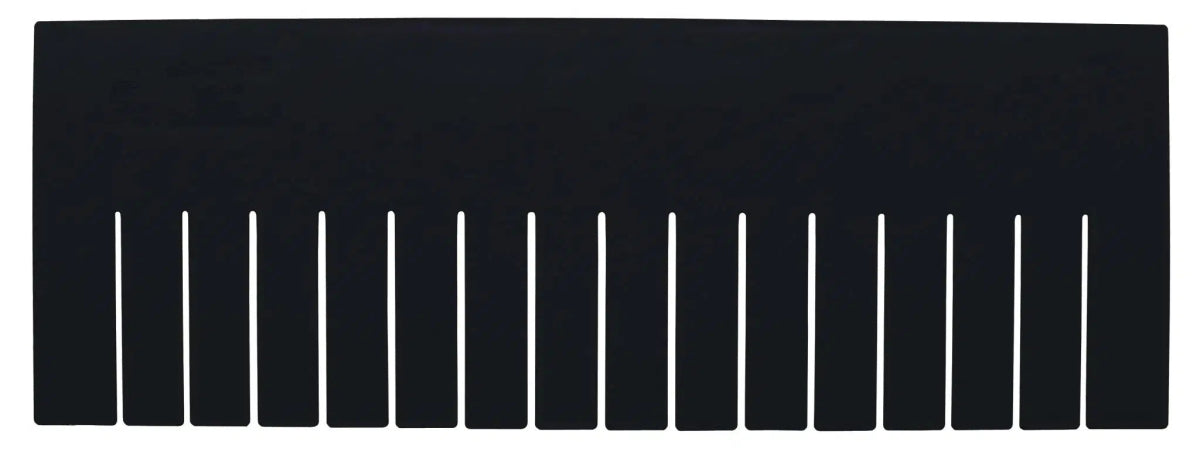
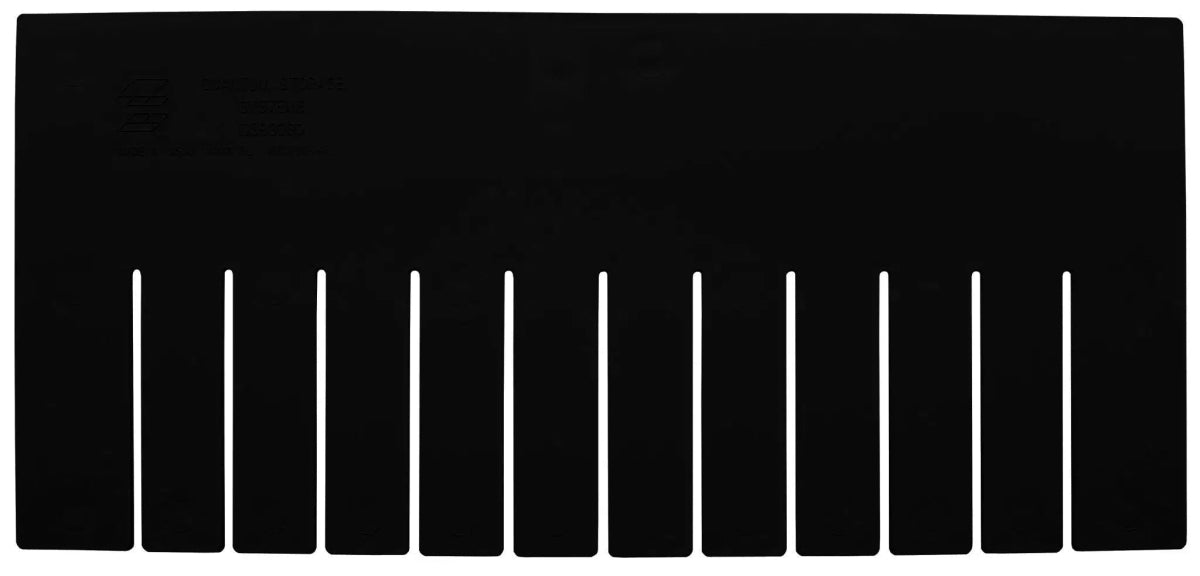
ESD safe divider boxes are the standard storage solution for printed circuit boards, sensitive ICs, populated assemblies, and any electronic components that need both compartmentalization and static protection. Each container is molded from carbon-filled copolymer polypropylene with a surface resistivity of less than 106 ohms per square, which dissipates static charges safely rather than holding them like a standard plastic bin.
How They're Different from Standard Grid Containers
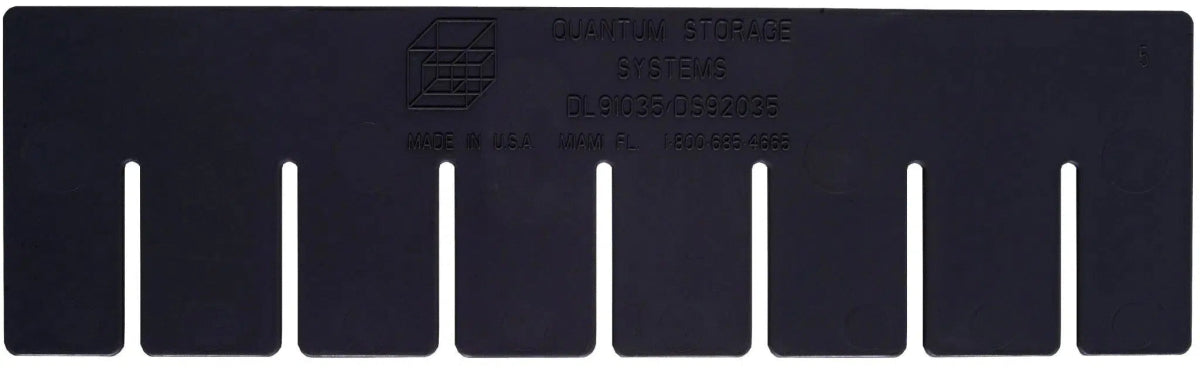
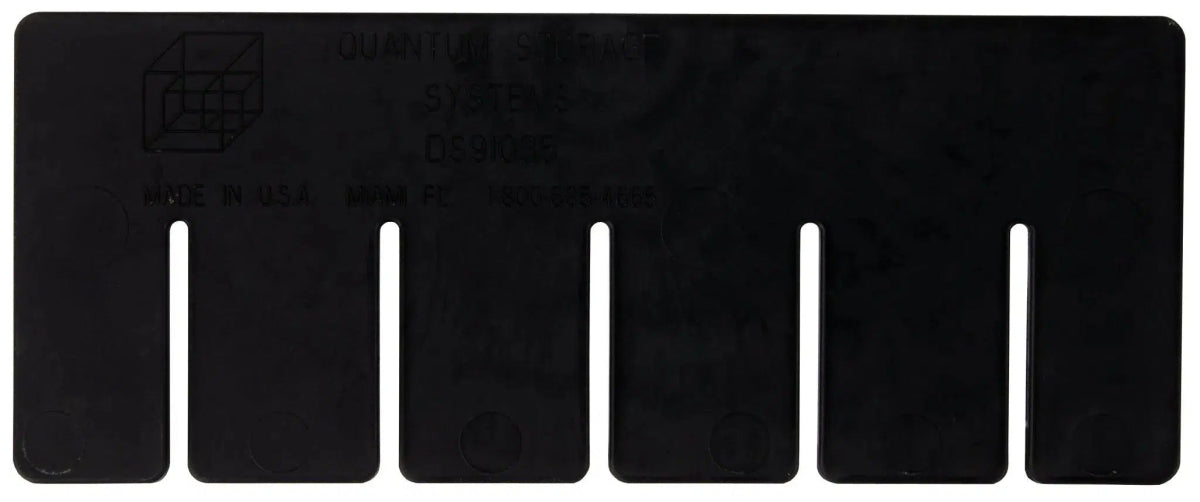
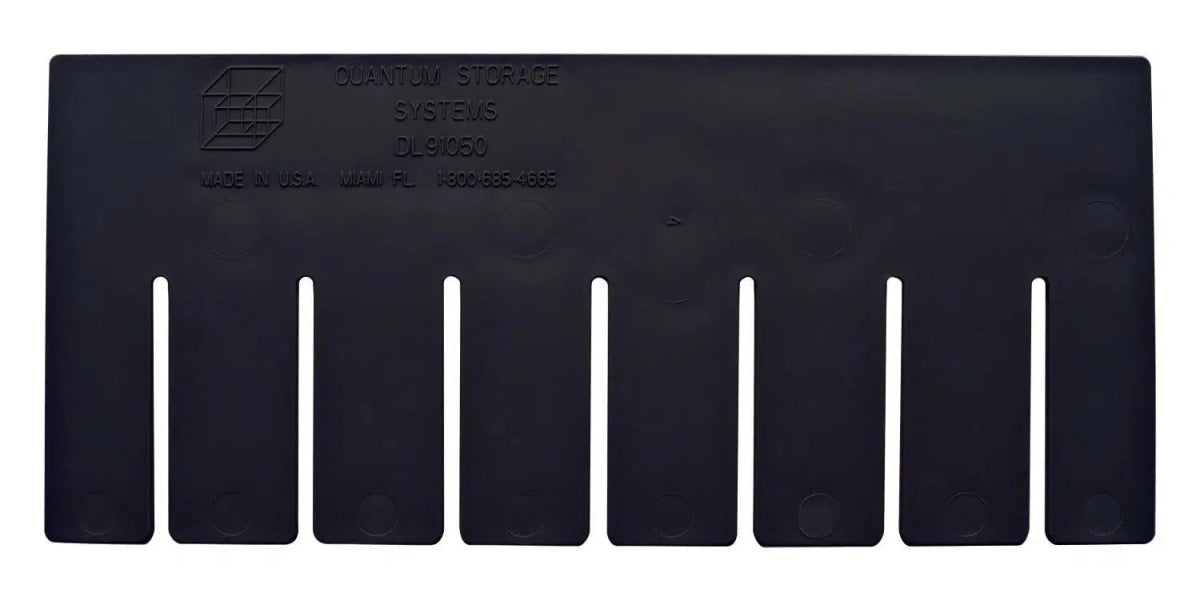
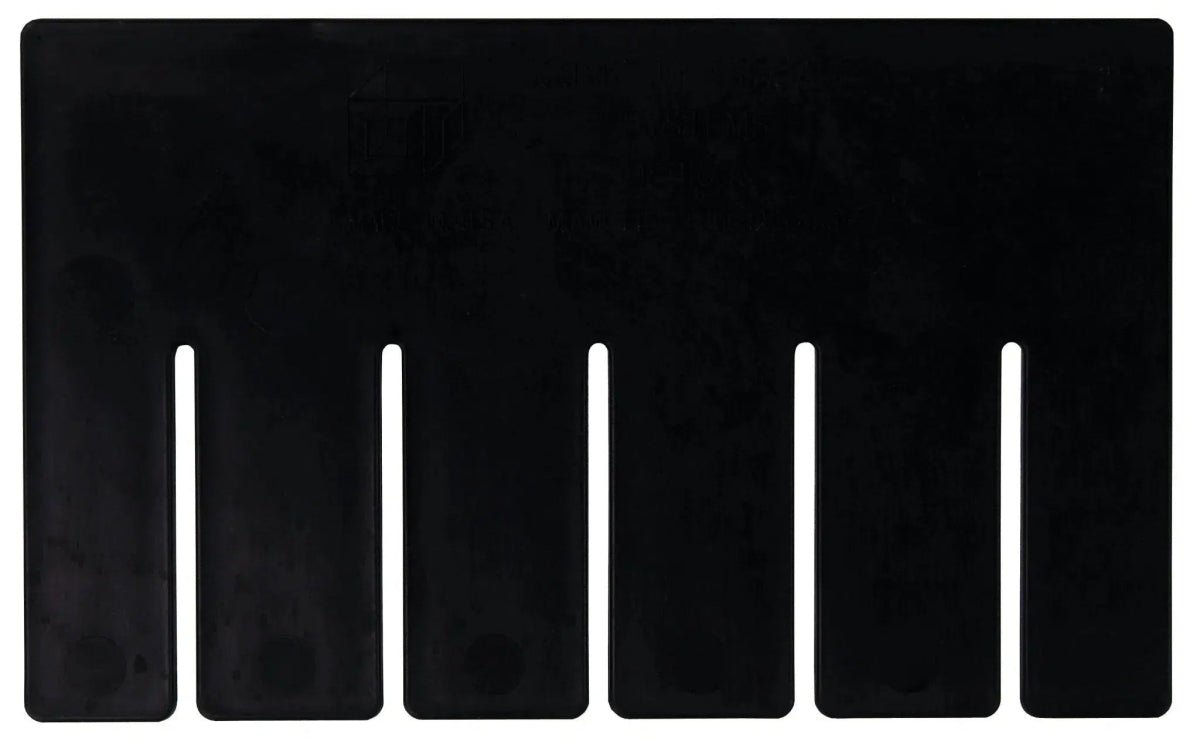
The physical dimensions, divider system, and stacking footprint of our ESD safe divider boxes are identical to Quantum's standard dividable grid containers — the critical difference is the material. Standard grid containers are insulative and can generate thousands of volts of static when a technician pulls a board out. Our ESD version is permanently static dissipative throughout the body of the container, not just coated, so the protection doesn't wash off or wear out with handling. If you're storing anything with an HBM rating under 2,000 volts (which includes most modern ICs, CMOS devices, and populated PCBs), the ESD safe version is the correct specification.
Sizes and Divider Configurations
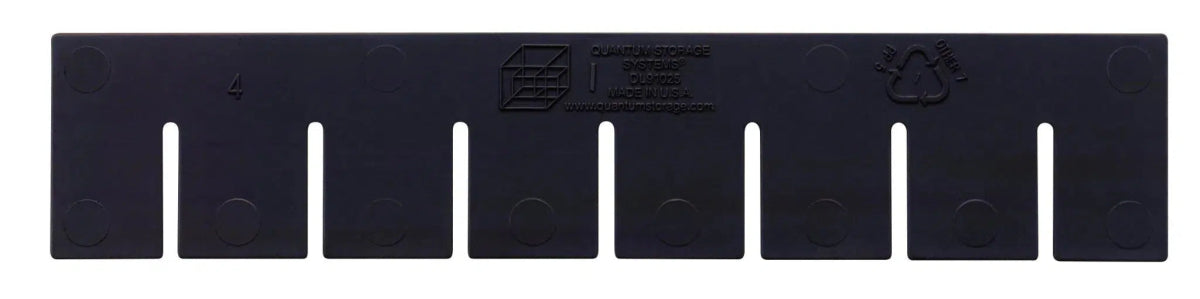
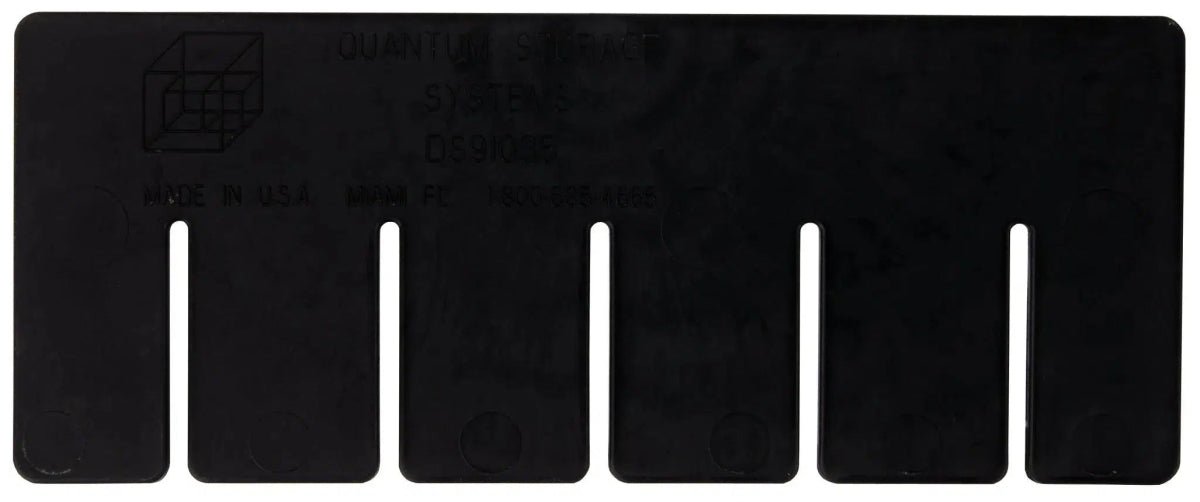
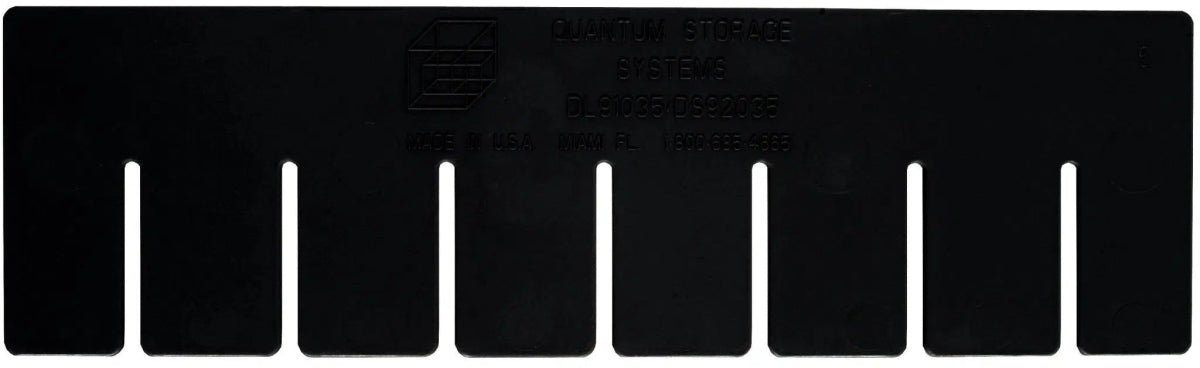
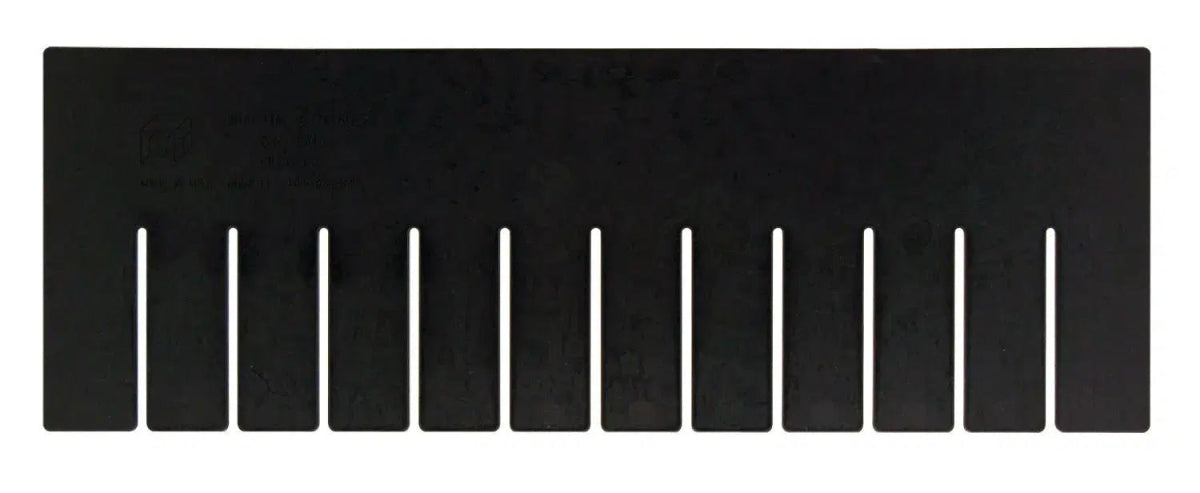
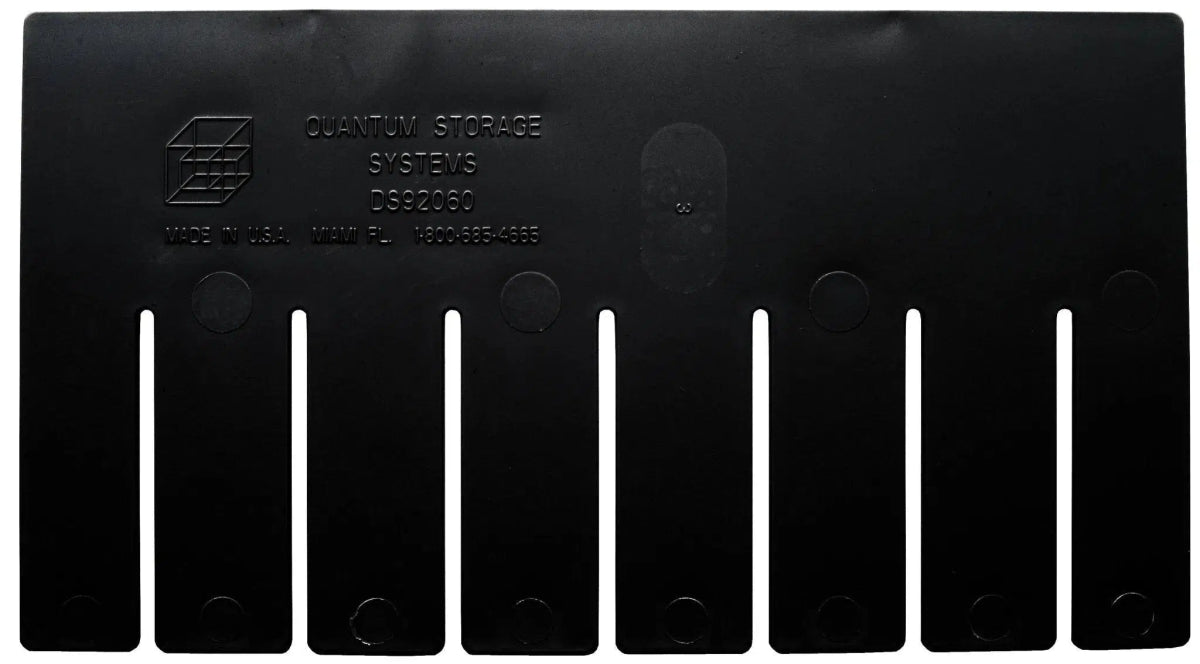
The DG series is stocked in 11 sizes across three footprint families, ranging from shallow pick bins to 12-inch-deep totes for larger populated assemblies. Every container accepts both length dividers and width dividers, and the slot spacing allows subdivision down to a 1-1/8 inch square compartment — small enough for individual ICs, passives, or connector shells, and adjustable in minutes as your mix changes. Optional snap-on covers protect contents from dust and contamination during stacking or transport, and label holders are available for every size to keep part identification at the point of use.
Typical Use Cases in Electronics Manufacturing
All prices include free shipping, and we offer bulk pricing for full carton and pallet orders. Need help speccing the right size or divider configuration for your line? Contact us with your board dimensions and component mix and we'll put together a quote.
Frequently Asked Questions
What's the difference between ESD safe divider boxes and standard divider boxes? +
The dimensions, dividers, and stacking footprint are identical. The difference is the material. Standard divider boxes are made from insulative polypropylene that holds a static charge and can generate thousands of volts of ESD during normal handling. ESD safe divider boxes are molded from carbon-filled copolymer polypropylene with a surface resistivity of less than 106ohms per square, which safely dissipates static charges. The protection is permanent and built into the material, so it does not wash off or wear out. Any component with an HBM ESD rating under 2,000 volts, which includes most modern ICs, CMOS devices, and populated PCBs, should be stored in the ESD safe version.
What surface resistivity do ESD safe divider boxes have? +
Our ESD safe divider boxes have a surface resistivity of less than 106 ohms per square (less than 1 megohm). This places them in the static dissipative range as defined by ANSI/ESD S20.20, the standard specification for ESD storage containers used inside an ESD Protected Area. Dissipative materials bleed static charges to ground gradually and safely, unlike conductive materials that can cause a sudden discharge or insulative materials that hold charge indefinitely.
What sizes and divider configurations are available? +
We stock the DG series in 11 sizes across three footprint families. Depths range from shallow pick bins for small components up to 12 inches deep for larger populated assemblies. Every container accepts both length and width dividers, and the slot spacing allows subdivision down to a 1-1/8 inch square compartment. Dividers can be reconfigured as often as needed without tools. Optional snap-on covers and label holders are available for every size.
Can ESD safe divider boxes be used for transport outside the EPA? +
Dissipative divider boxes with snap-on covers provide solid protection for moving components between workstations and storage areas inside the ESD Protected Area. For transport outside the EPA, between buildings, or shipping to customers, ANSI/ESD S20.20 requires a shielded (conductive) container that creates a Faraday cage effect. In those cases, place the populated divider box inside a conductive tote, or use moisture barrier bags with desiccant for components that are both ESD-sensitive and moisture-sensitive.