


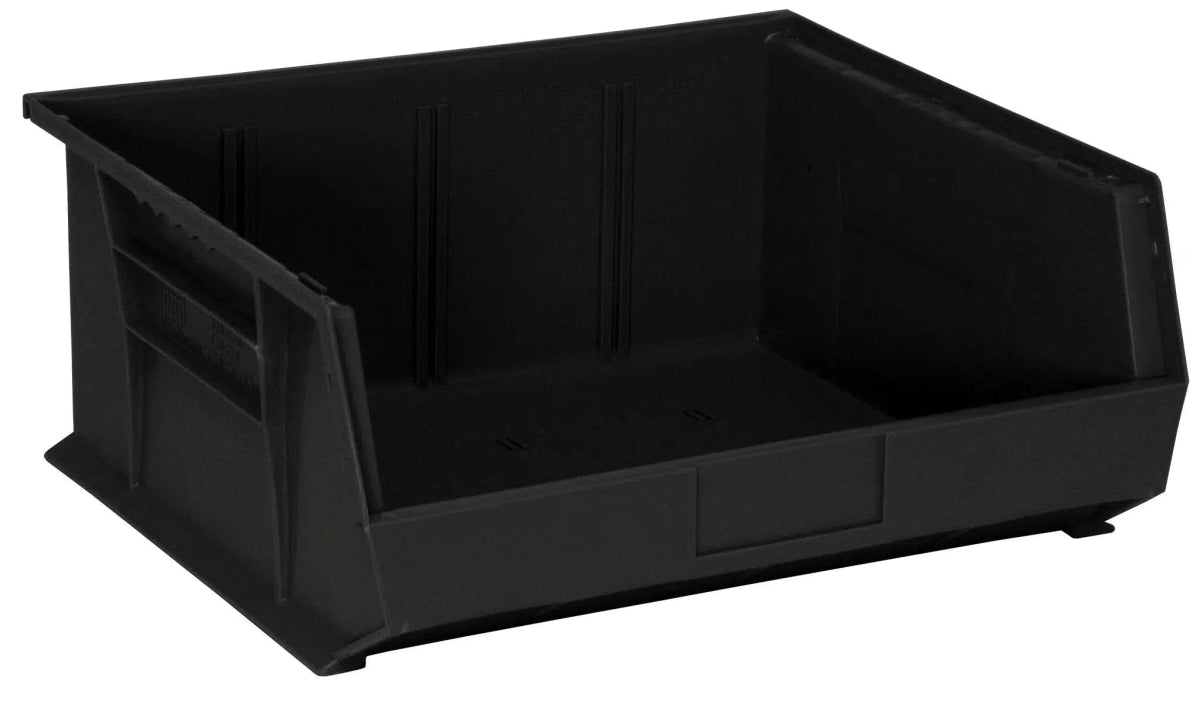
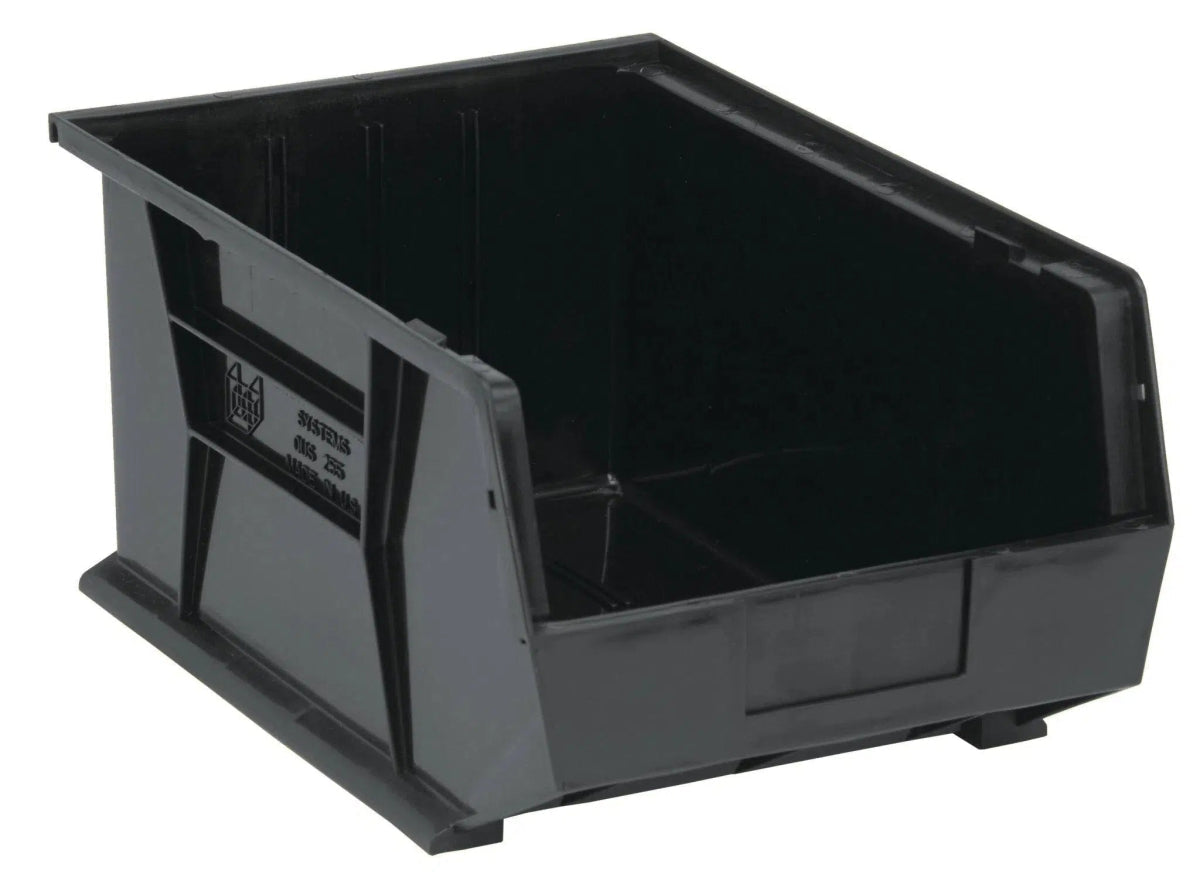
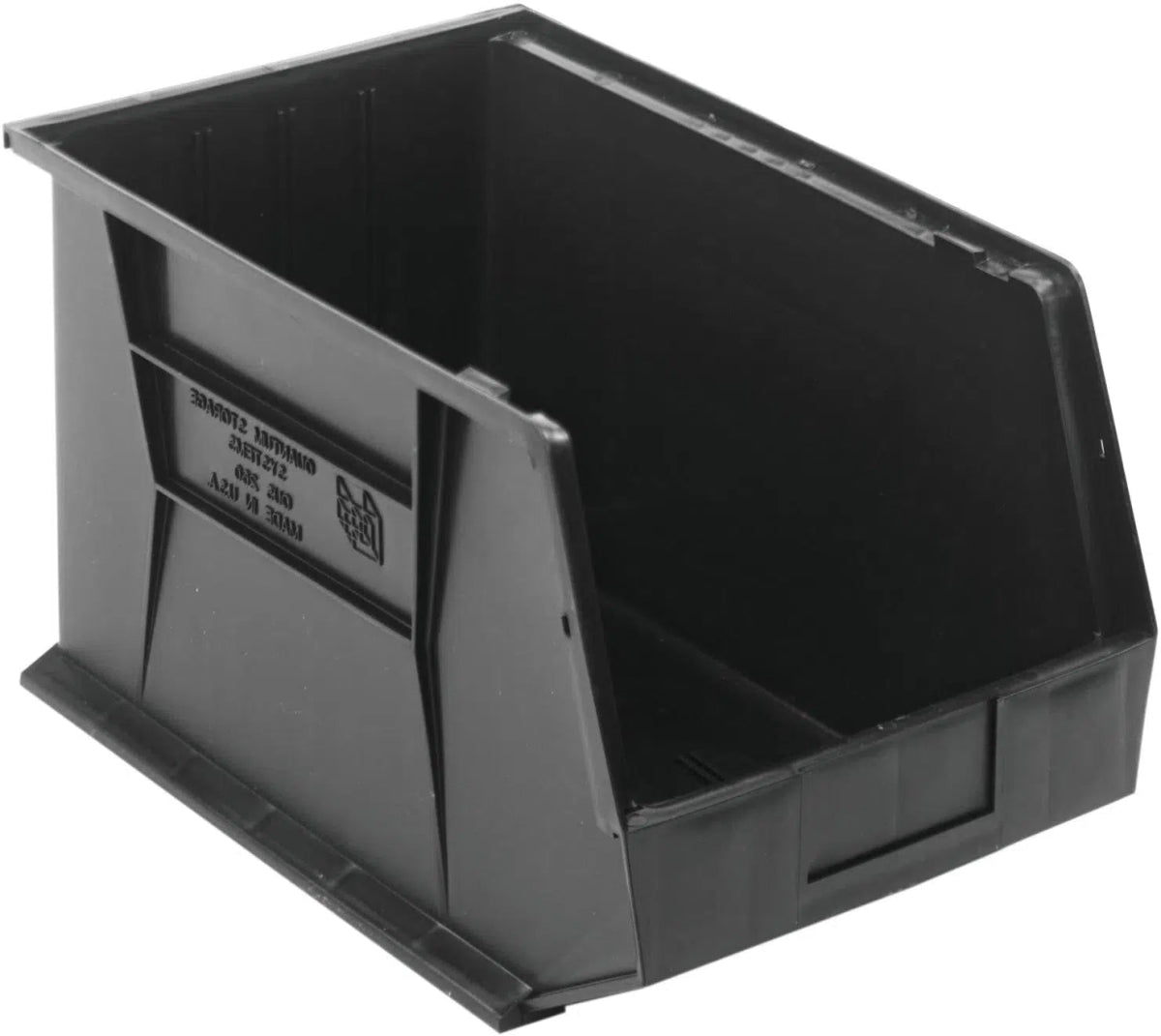
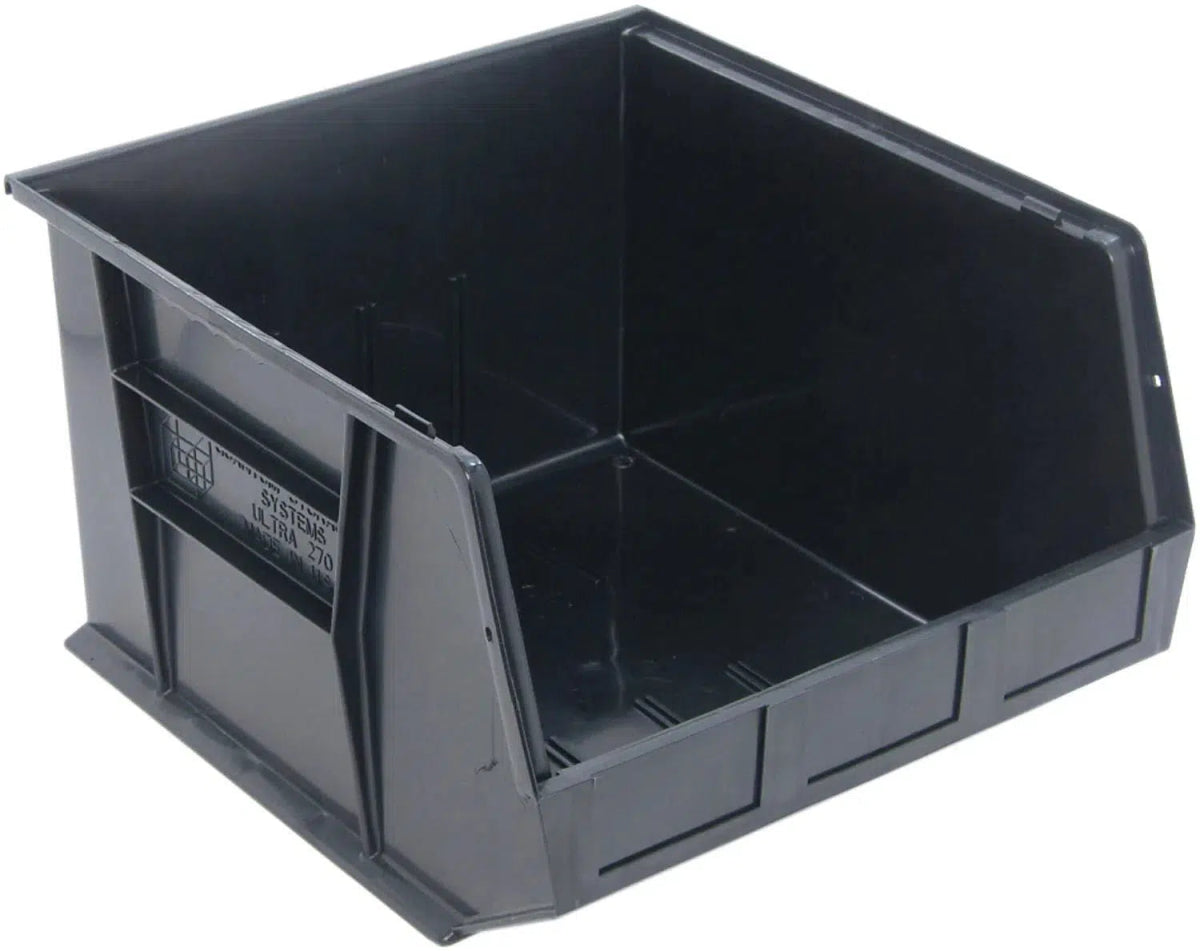
ESD Safe Stacking Bins for Electronics Assembly Lines
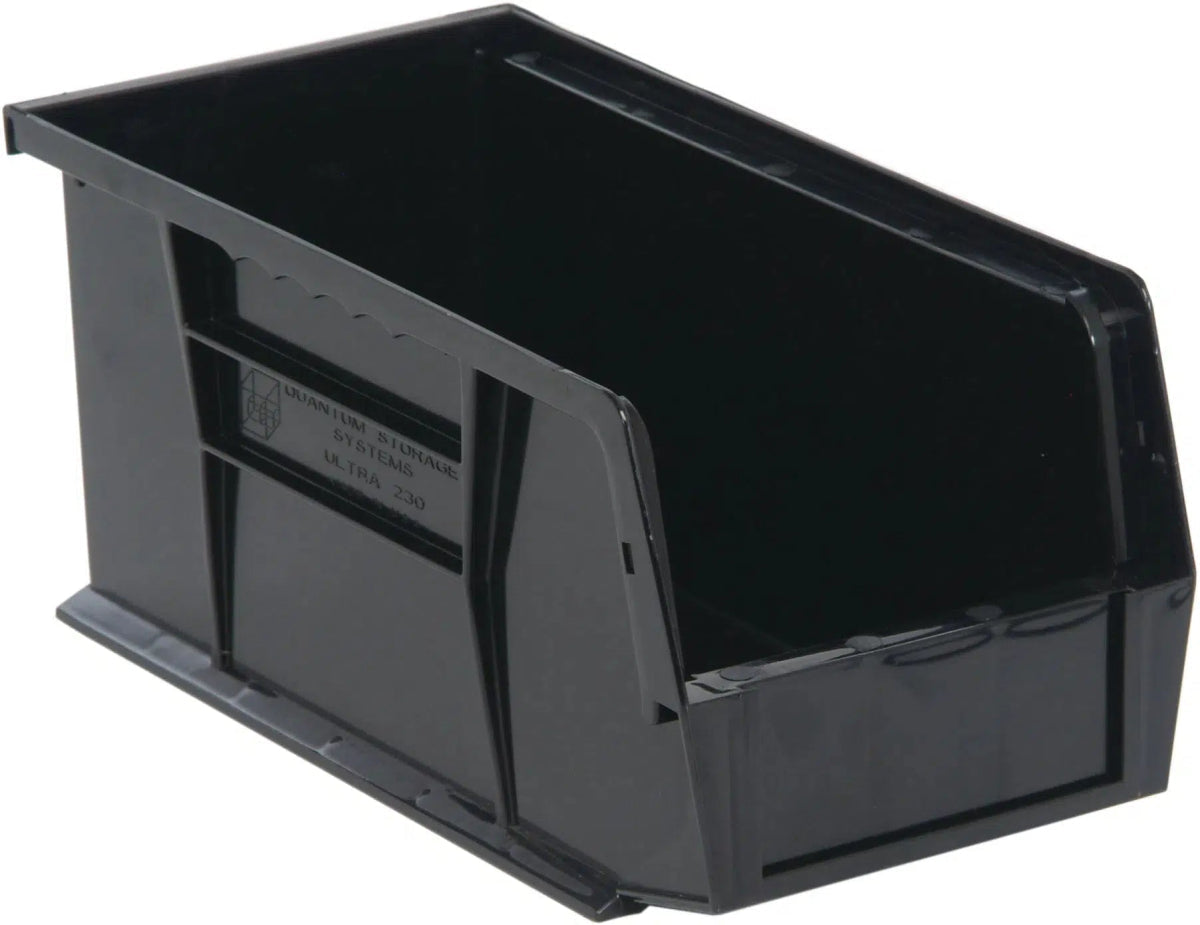
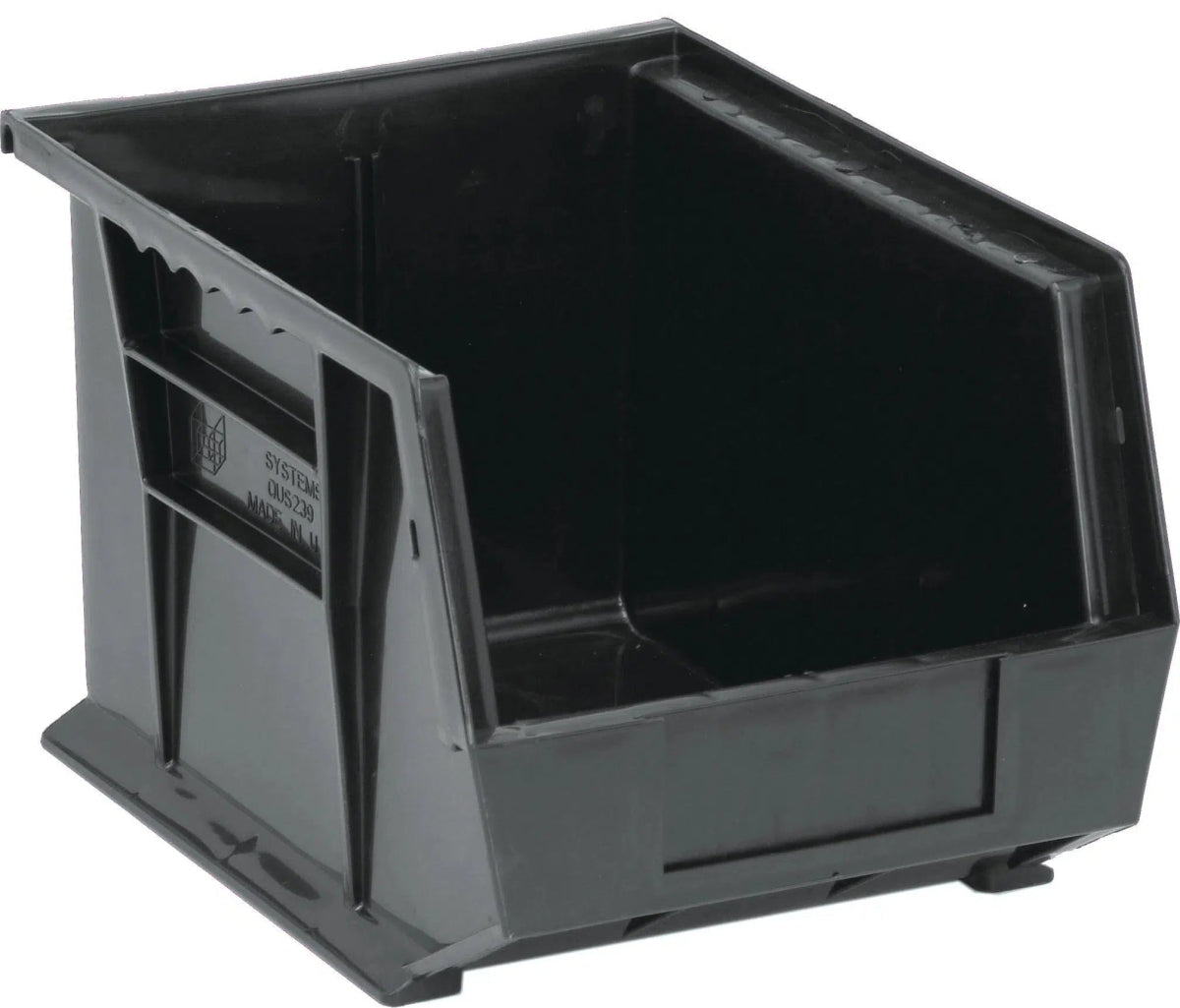
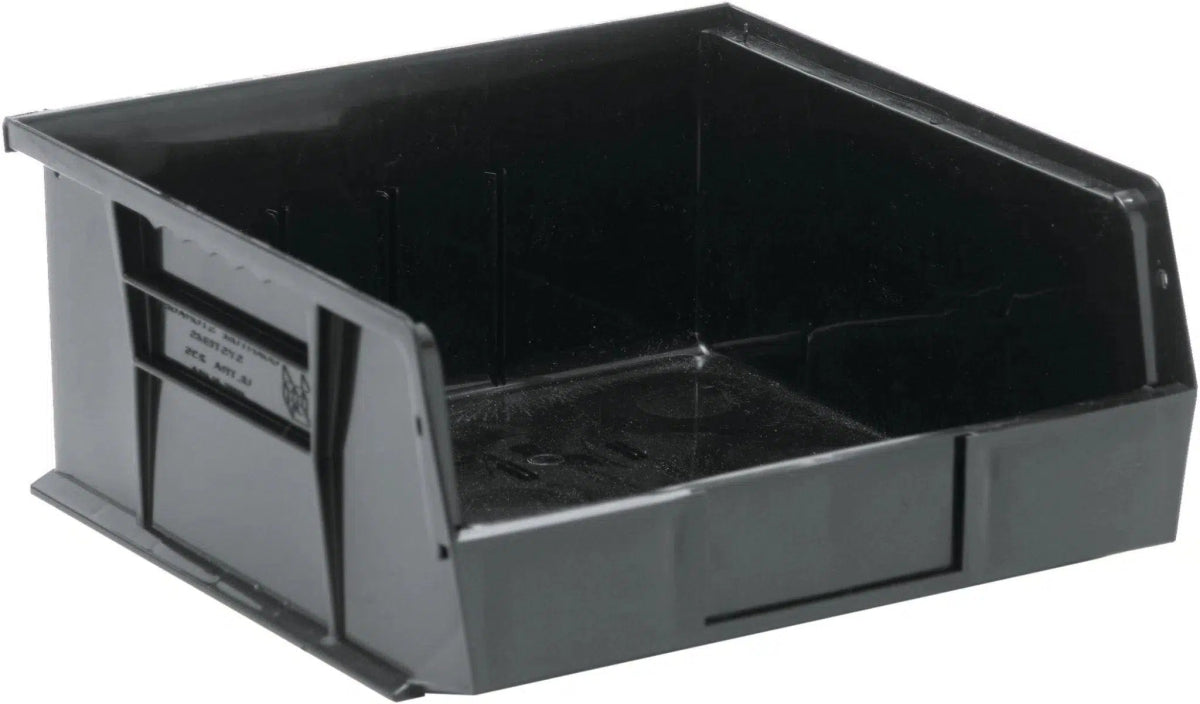
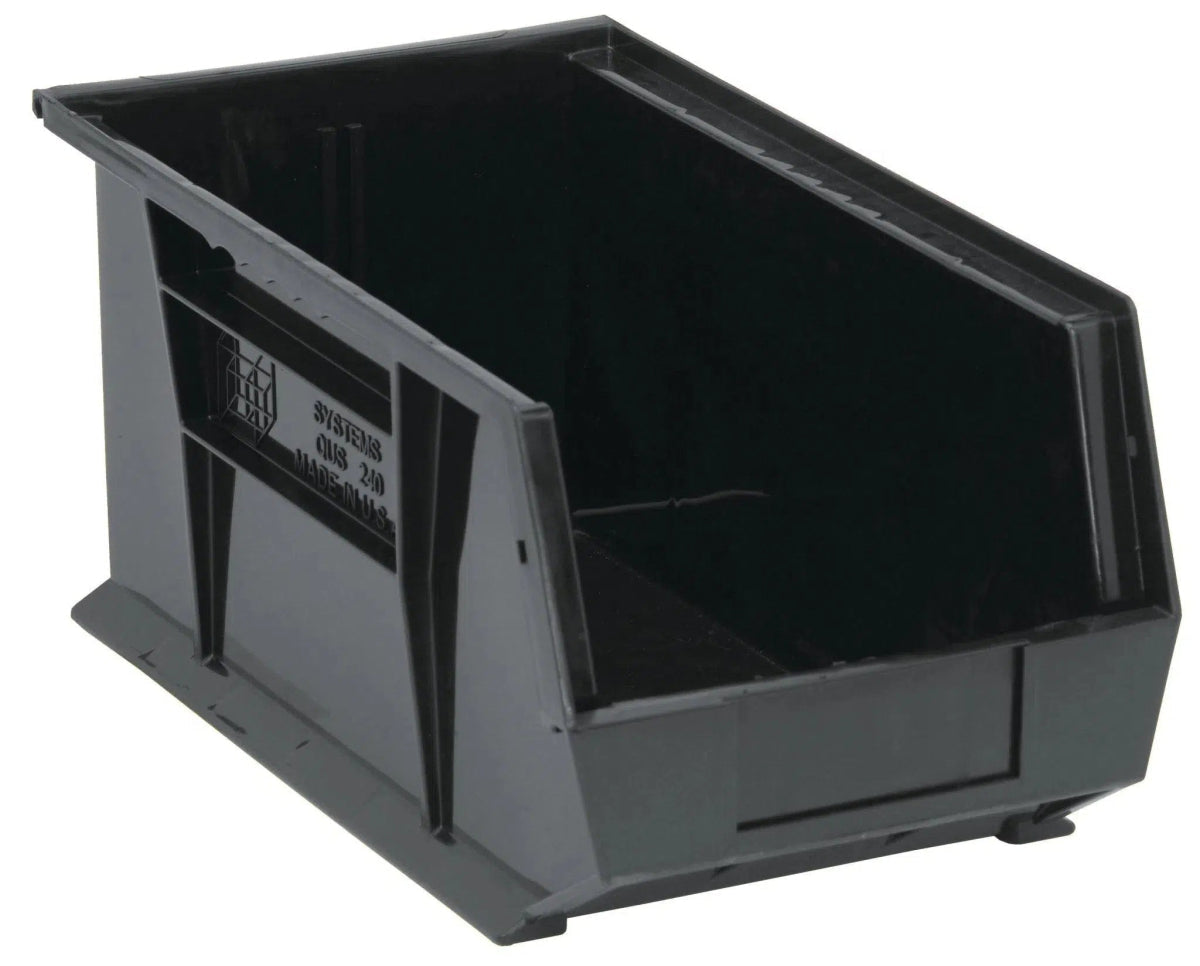
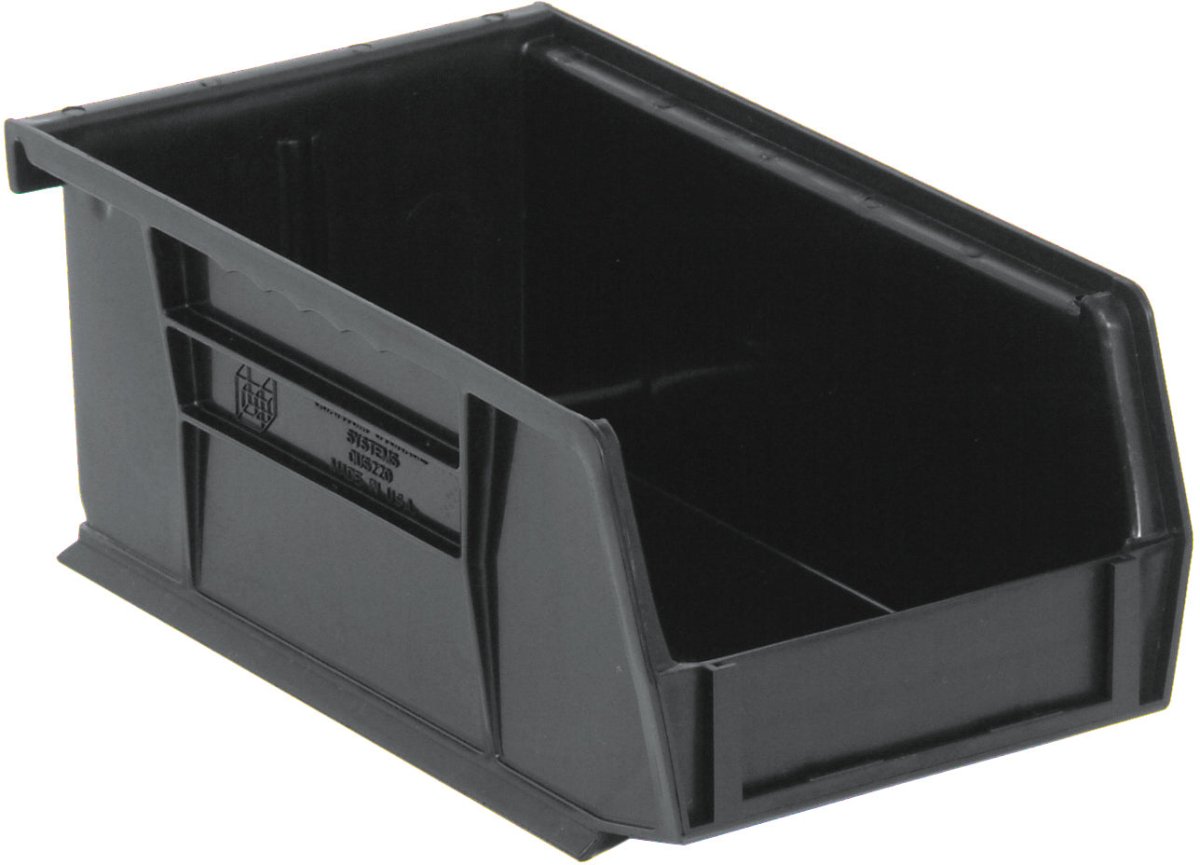
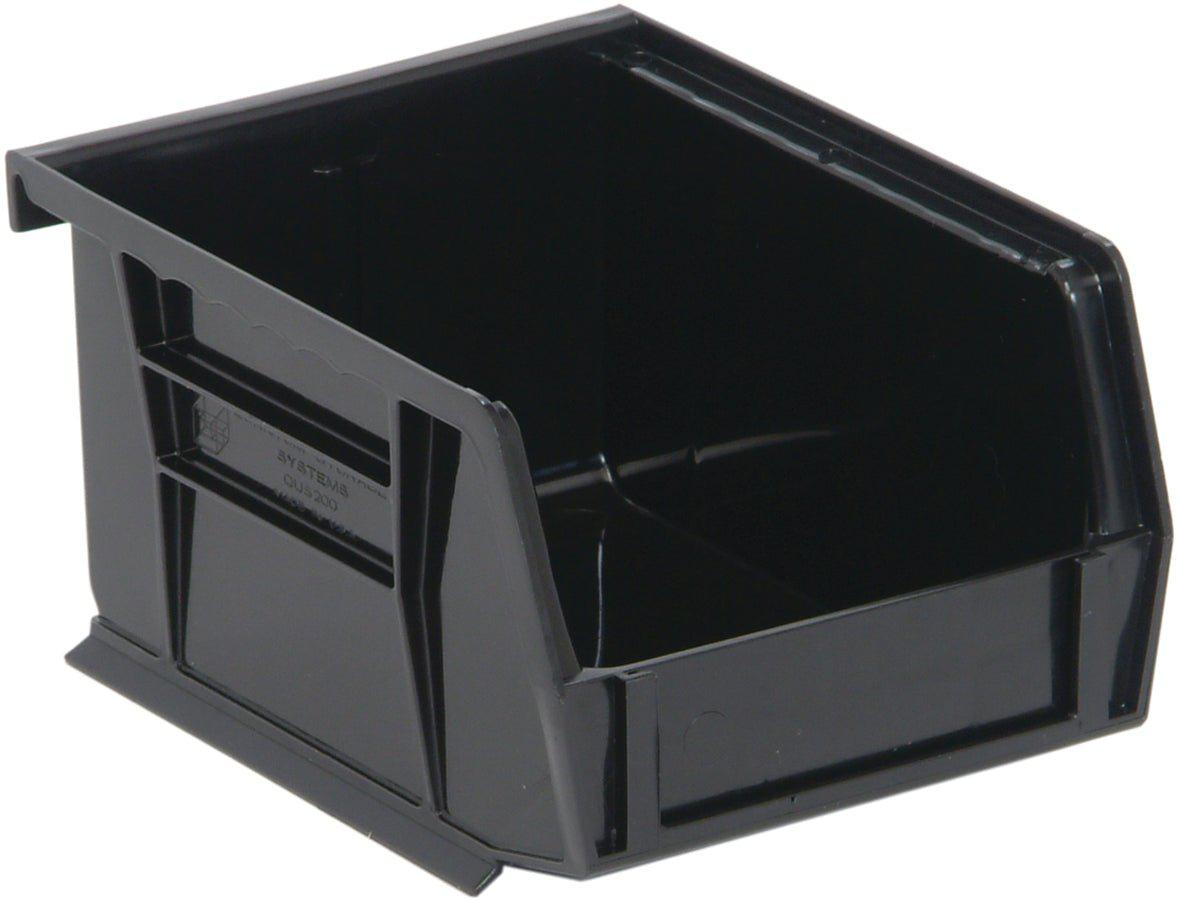
ESD safe stacking bins are the standard container for line-side parts storage in electronics manufacturing. They stack securely at the workstation, hang from louvered panels and rail systems, and give operators a hopper-front opening for fast one-handed picking — all while protecting ESD-sensitive components from the static charges that normal handling generates. Every bin is molded from carbon-filled copolymer polypropylene with a surface resistivity of less than 106 ohms per square, so the ESD protection is built permanently into the material itself rather than applied as a coating.
How They're Different from Standard Stacking Bins
The QUS-CO series has the exact same stack-and-hang geometry as Quantum's standard Ultra Stack and Hang bin — same hopper, same interlocking lip, same hanging rail compatibility. What's different is what the bin is made of. Standard stacking bins are insulative polypropylene that accumulates charge during handling and can generate thousands of volts of ESD when a board, reel, or tray slides against the interior wall. Our ESD version is static dissipative throughout the entire molded body, not just a sprayed or wiped treatment, so the protection does not degrade with use or cleaning. Any component or sub-assembly with an HBM ESD rating under 2,000 volts belongs in the QUS-CO version, not the standard one.
Sizes and Configuration Options
The QUS-CO series is stocked in 10 sizes, from compact kitting bins for small components up to large hopper bins deep enough for sub-assemblies and populated PCBs. All sizes interlock with each other for stacking, hang from standard louvered panels and bin rails without adapters, and accept optional label holders at the hopper front for fast part identification. Dividers are available for applicable sizes where subdivision is needed for small passives, connectors, or fasteners.
Typical Use Cases in Electronics Manufacturing
All prices include free shipping, and we offer bulk pricing for full carton and pallet orders. Need help speccing sizes to match your existing louvered panels, rail systems, or cart shelving? Contact us with your configuration and we'll put together a quote.
Frequently Asked Questions About ESD Safe Stacking Bins
What's the difference between ESD safe stacking bins and standard QUS stacking bins? +
The stack-and-hang geometry, hopper opening, interlocking lip, and rail compatibility are identical. The difference is the material. Standard QUS stacking bins are made from insulative polypropylene that can hold thousands of volts of static after normal handling. ESD safe QUS-CO stacking bins are molded from carbon-filled copolymer polypropylene with a surface resistivity of less than 106 ohms per square, which safely dissipates static charges. The protection is built into the material permanently and does not wash off or wear out. Any component with an HBM ESD rating under 2,000 volts — which includes most modern ICs, CMOS devices, and populated PCBs — should be stored in the ESD safe version.
Can ESD safe stacking bins be stacked and hung from the same systems as standard bins? +
Yes. The QUS-CO series is dimensionally identical to the standard QUS series, so they interlock with each other and hang from the same louvered panels, bin rails, and cart systems. You can retrofit an existing workstation to ESD by swapping the bins without changing any mounting hardware. Do not mix standard and ESD bins at an ESD-sensitive station, though — the insulative standard bin next to the dissipative ESD bin defeats the purpose of the program.
What surface resistivity do ESD safe stacking bins have? +
Our ESD safe stacking bins have a surface resistivity of less than 10-6 ohms per square. This places them in the static dissipative range as defined by ANSI/ESD S20.20, the standard specification for ESD storage containers used inside an ESD Protected Area. Dissipative materials bleed static charges to ground gradually and safely, unlike conductive materials that can cause a sudden discharge or insulative materials that hold charge indefinitely.
Do ESD stacking bins need to be grounded? +
Yes. A dissipative stacking bin only provides ESD protection when the charge has somewhere to go — meaning the bin must sit on, or be hung from, a surface that is bonded to a common point ground. Grounded louvered panels, bonded bin rails, and ESD-safe cart shelving all work. An ESD bin sitting on an ungrounded painted-steel shelf is functionally no better than a standard bin. ANSI/ESD S20.20 requires that all conductive and dissipative surfaces inside the Protected Area share a common ground.